
Flying Drones in Cambodia: Permissions, Experience and What You Need to Know
I’ve been working as a drone operator in Cambodia since shortly after DJI launched the original Phantom in 2013. This post covers getting permission to fly in Phnom Penh and at the Angkor Archaeological Park.
Drone showreel, aerial videography across Cambodia
I've been working as a drone operator in Cambodia since shortly after DJI launched the original Phantom in 2013. Since then I've flown the Phantom 2, 3, 4 and 4 Pro, the Mavic Pro, Mavic Pro 2, Mini 3 Pro, and now the DJI Air 3. I've used drones on productions ranging from NGO field work and corporate videos to broadcast documentary and feature film. The progress in that time has been remarkable, with the introduction of dual lenses, omnidirectional obstacle sensing, extended battery life, and stabilisation that makes aerial footage possible in conditions where earlier models simply couldn't fly.
This post covers the two locations where you'll definitely be asked for permission, Phnom Penh and the Angkor Archaeological Park, along with some notes on indoor flying, drone photography, and some highlights of my drone flying in Cambodia.
Flying in Phnom Penh
For television and documentary productions, the permissions process in Phnom Penh is a two-stage process. You apply first to the Ministry of Information, which processes the permit. You then take that letter to City Hall, where they countersign and confirm that you have approval to fly within the capital. If you're making a feature film, the Ministry of Culture and Fine Arts is the relevant authority.
When I was flying for CNN's Nomad with Carlton McCoy, the local fixer gave me a copy of the permission letter, which was a good idea. Every time I took off, a security guard arrived and asked to see the permission. You will be asked to show your paperwork when openly flying in central Phnom Penh, so make sure you have it.
People have been detained for flying in restricted areas, and some incidents are well known in the production community here. For professional work in Phnom Penh, obtaining permission before you fly is not optional.
At the time of writing, there is a blanket ban on drone flights across Cambodia as a result of the Thailand-Cambodia border situation. Permissions are still being granted for the right projects, but this is worth factoring into your planning if you're scheduling a drone shoot in the near future.
Flying at the Angkor Archaeological Park
Angkor operates through the Apsara Authority, the body responsible for managing the archaeological park. You apply in writing and the process typically takes between two weeks and a month. The Apsara Authority will confirm whether permission is granted and advise on the fee, which is set case by case rather than at a fixed rate.
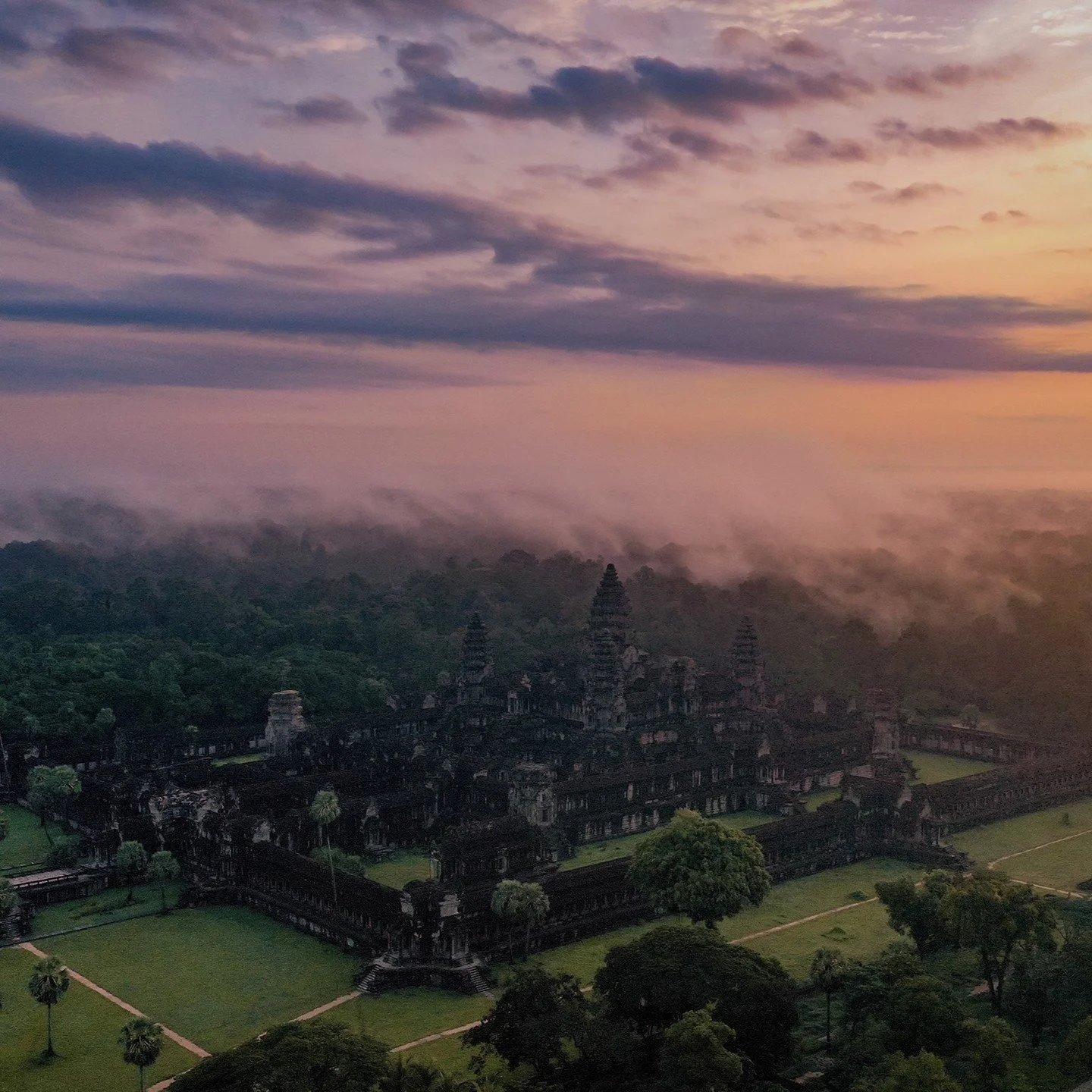
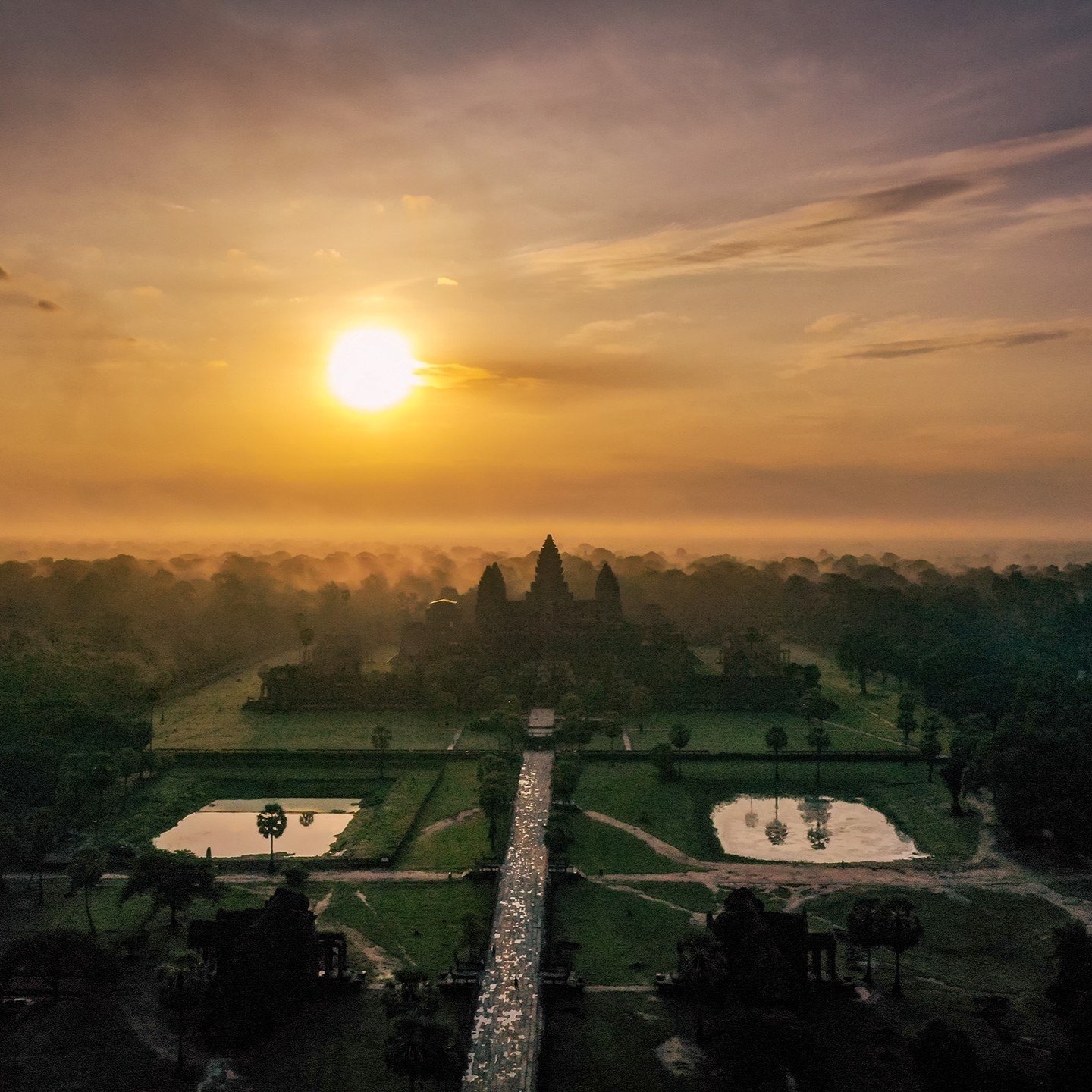
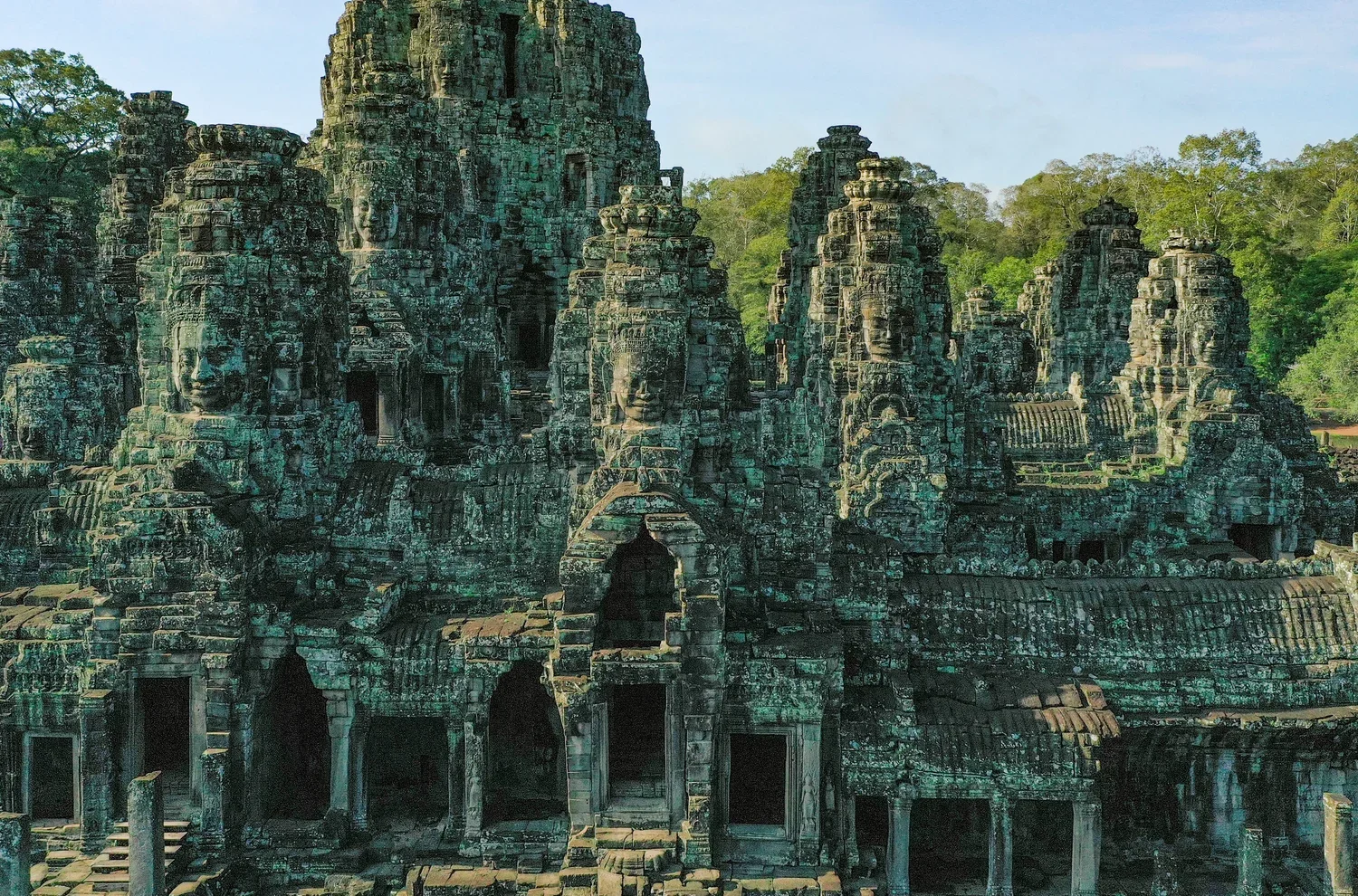
I've been lucky enough to fly my drone at the temples twice. The first was for Taste of Cambodia, a travel series for the Cambodia Ministry of Tourism produced with Hanuman Films, where I had a three-day permit covering Angkor Wat, Angkor Thom and Ta Prohm, the temple featured in Tomb Raider. The second was for CNN's Nomad with Carlton McCoy, shooting at Angkor Wat.
I was up before sunrise on the first two mornings of the Taste of Cambodia shoot at Angkor Wat, waiting for light that never came through the cloud. On the third morning it had rained overnight and, as the sun rose, mist lifted from the stone path leading up to the temple and the surrounding jungle. The footage from that morning made up for the earlier disappointments, and it's the kind of image that's only available if you have the right permissions and the patience to wait for the conditions to arrive.
Indoor Drone Work
Part of the drone work I do has been flying inside buildings, which is a different discipline from outdoor flying and one that demands a drone with reliable obstacle sensing.
For a corporate film for Endo Lighting, I flew inside AEON 3 Mall in Phnom Penh to capture their lighting installation. Flying up through the full height of the central atrium and along the skywalk, a key part of the design they wanted to show, gave the client footage that couldn't have been achieved any other way. You can see the video here.
For a video produced with Pixel Peers for the ILO's Better Factories project, I flew inside a garment factory in Kandal Province on the outskirts of Phnom Penh, documenting the manufacturing environment as part of their Better Factories programme.
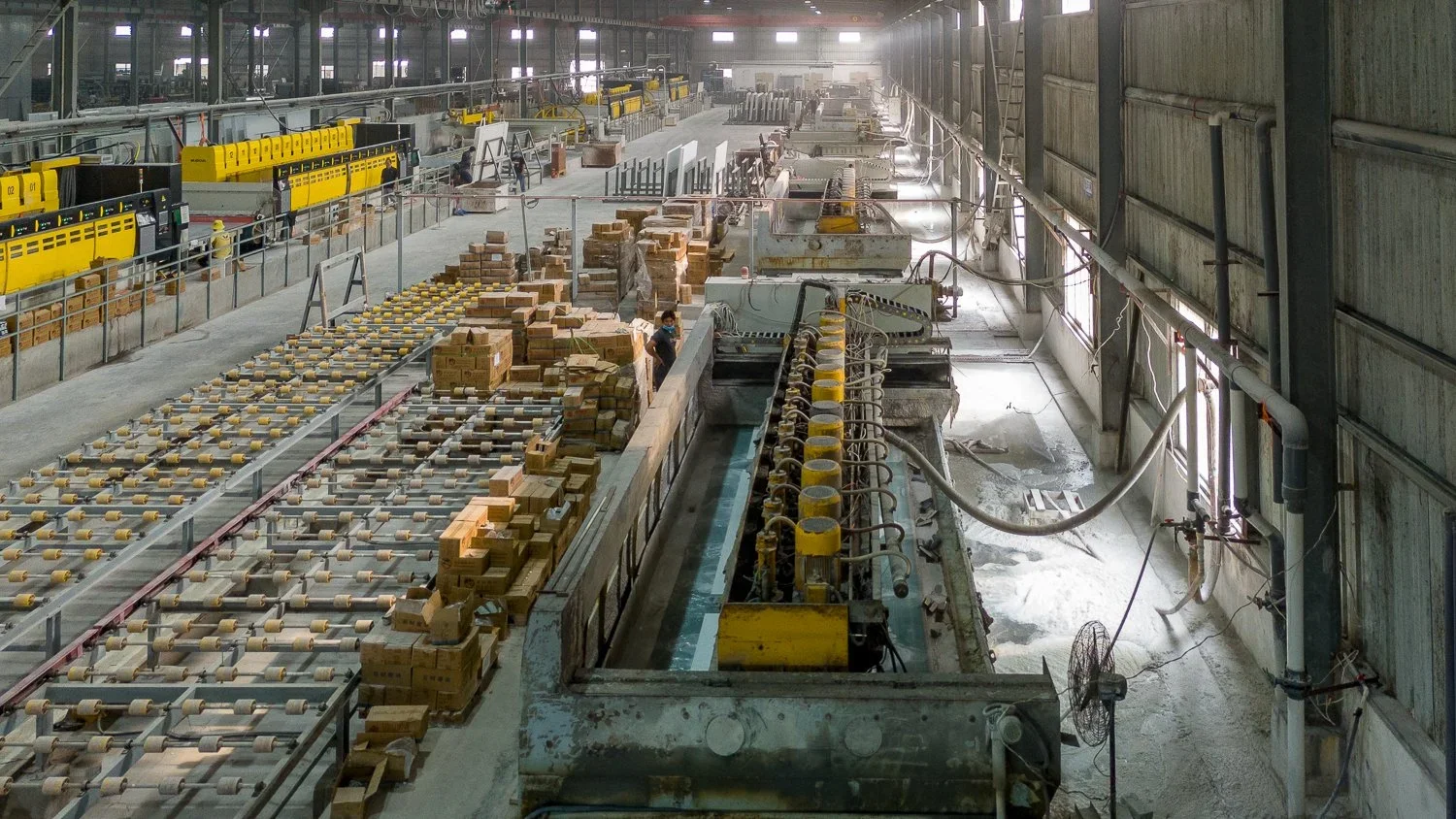
I also flew inside Cambodia Zulite Stone's quartz manufacturing facility for a corporate film delivered for exhibition at a trade show in New York. The DJI Air 3's omnidirectional obstacle sensing makes it well suited to indoor work of this kind.
On a number of shoots, drone photography has been delivered alongside the video. The Air 3 and many other DJI drones make switching between modes straightforward. You press the left-hand shoulder button and it switches between photography and video. Once the settings for both are configured, it's easy to switch at the click of a button, and then another click either takes a photo or starts recording. Stills and video can be captured in the same session without significantly disrupting the shooting workflow. Both Endo Lighting and Cambodia Zulite Stone received drone photography deliverables alongside their films. Drone stills are something I can offer alongside videography on most shoots.
Flying Across Cambodia
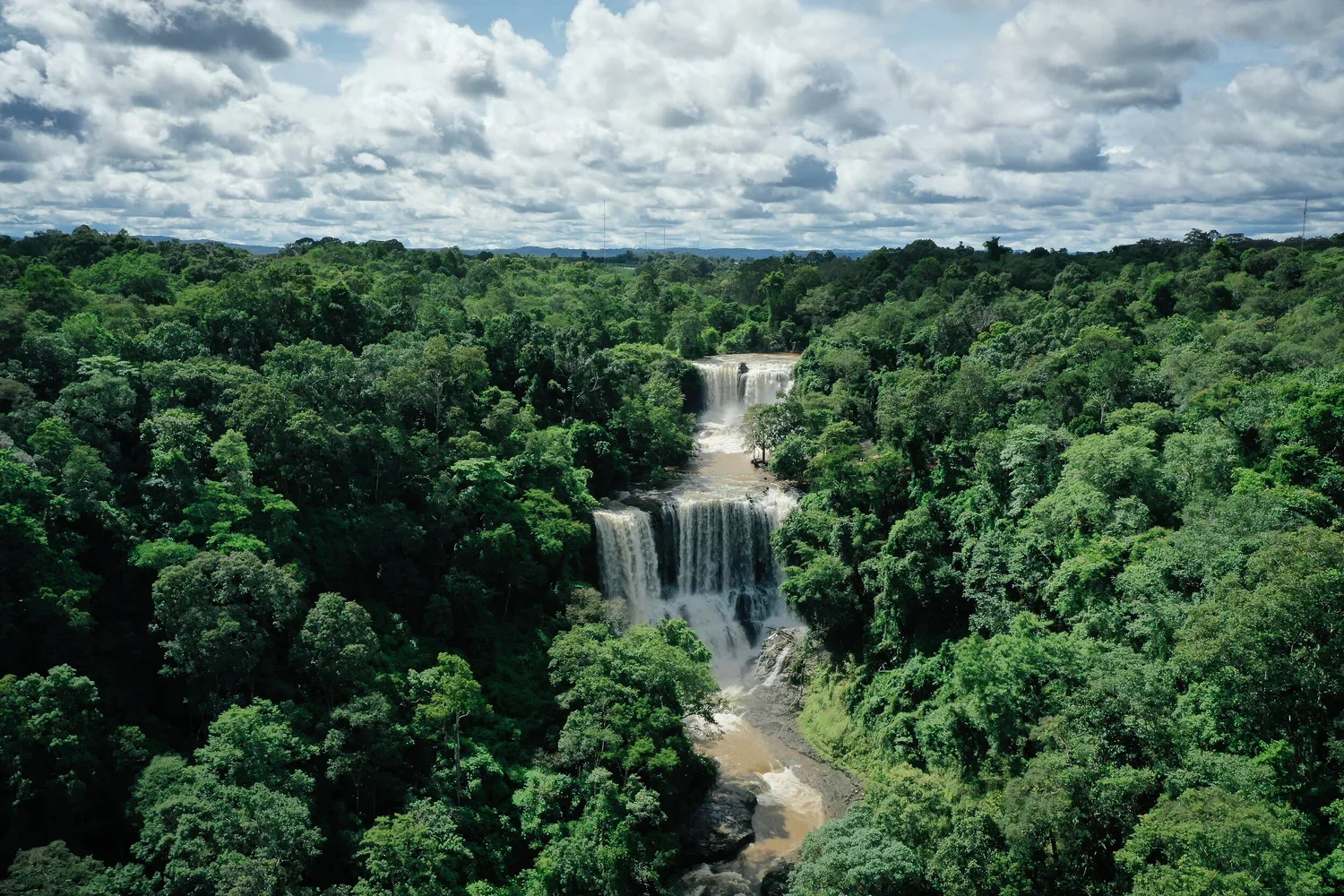
Across Cambodia as well as Phnom Penh and Angkor, I've flown for a wide range of productions. Locations include Kampot and Kep on the coast, the highlands of Mondulkiri, Kratie, Stung Treng, Battambang and Kandal Province. Outside the capital and the archaeological park, enforcement is lighter and I've never been stopped when flying recreationally, though technically a local authority approval from the relevant sangkat is required alongside the Ministry of Information permit for professional productions.
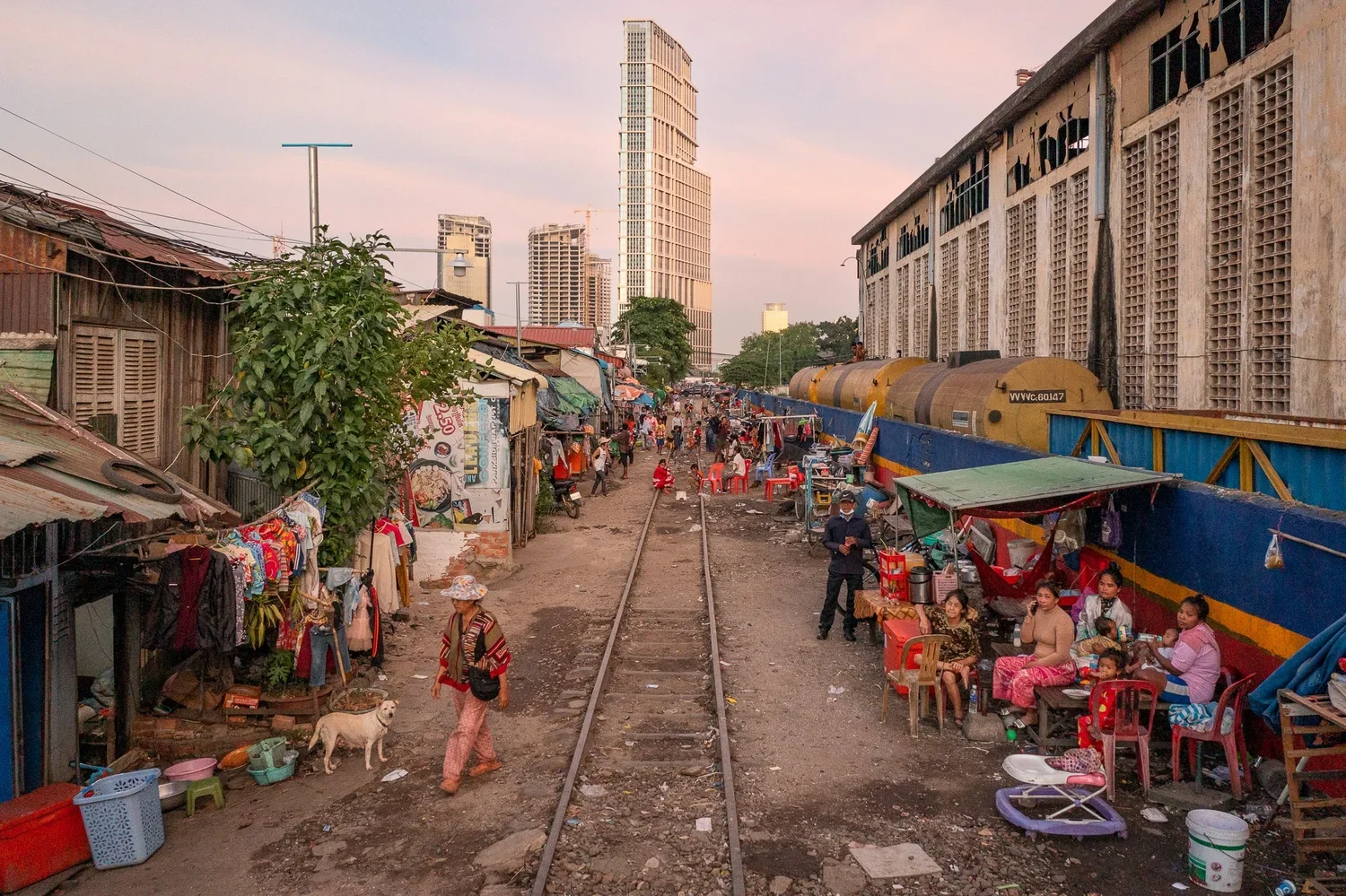
Productions involving significant drone work include a 46-minute documentary for CNA Insider on the Funan Techo Canal, where I flew over the Mekong River, Battambang's rice paddies and the Phnom Penh Autonomous Port, and the Taste of Cambodia series for the Ministry of Tourism. For the CNN shoot I flew Central Market, Wat Phnom, Vattanac Tower, the CBD and the Angkor temples. For Wild Frontiers, one of the UK's leading adventure travel companies, I flew across India, Ukraine and Moldova. You can see a selection of that aerial work in my drone reel for Khreativa.
Cambodia as a Production Destination
The Cambodia Tourism Board recently launched a Location Scouting Programme designed to support international film, television, documentary and commercial productions. The programme covers up to five days of on-ground expenses during location scouting, including accommodation, local transport, fixer or guide services, and entry fees for national parks and heritage sites. Flights are not covered, but it's an encouraging development that reflects a genuine effort by the Cambodian government to attract international productions to the country.
Kit
My current drone is the DJI Air 3, with 28mm and 70mm lenses and omnidirectional obstacle sensing, suitable for both indoor and outdoor work. Additional drones are available to hire for productions requiring different specifications. Full production kit, including lighting, sound and grip, is available alongside drone services.
You can see more of my drone work on the drone operator page, and further examples across the corporateand documentary portfolio pages.
If you have questions about flying drones in Cambodia, whether for a production you're planning or just to understand the permissions process, feel free to get in touch. Based in Phnom Penh and available for assignments across Southeast Asia.
Videographing Kitty Van Der Heidjen’s visit to Siem Reap for UNICEF
It was a pleasure to be contacted by UNICEF to make a video of Kitty Van Der Heidjen’s visit to Siem Reap. UNICEF’s communications department are always easy to work with. They have a clear vision of what they want to achieve. They provided me with a solid brief that we went over during pre-production so everyone was clear on what the outputs would be.
Kitty Van Der Heidjen is the Deputy Executive Director of Partnerships for UNICEF. She visited a school in Siem Reap to see how UNICEF has been supporting the life skill development for young people.
In the morning we visited a school and the students made presentations about their campaigns to raise awareness about the environment and climate change.
Kitty was impressed by what she saw. ‘I have been completely amazed by what I saw. In front of me on the podium, I had 12-year-olds, mostly girls, by the way, who were talking about climate change,’ she said.
‘They were talking about what they saw in their community. They were talking about what they saw in their community in terms of how that is impacting their lives. and the need to collect waste and the need to recycle waste,’ she added.
Kitty was also impressed by the tree planting campaign run by the students, ‘They were talking about planting trees and making sure that the trees were well-maintained, so that we could actually do something about climate change.’
In the afternoon we visited the communities to see the positive changes the young people’s projects had created.
‘A big part of what they are doing is not just talking about this in their classroom, but really talking to their parents, talking to other classmates, talking to their communities and making change happen,’ said Kitty.
It was a challenging shoot as Siem Reap was suffering from a heatwave and a severe drought that was taking away vital income from the communities surrounding the school.
‘The village pond, where they would take tourists to go on a boat ride is gone,’ said Kitty.
While the situation is dire, it was great to see youth-led initiatives making such a positive impact in their communities. Hopefully UNICEF can expand their work in this area both in Cambodia and globally and Kitty can mobilise more youth to join the Green Rising movement.
You can see more examples of my work with UNICEF here and here.
On assignment as a videographer on UNICEF's Generation Future project
Nick Sells contacted me to work as a videographer to document UNICEF’s Generation Future programme in Cambodia. Generation Future is a mentorship programme for young Cambodians with big ideas. The project will form part of UNICEF’s celebration of World Children’s Day.
After being selected for the programme, a group of young Cambodians receive one-on-one guidance from accomplished mentors. They also get seed funding to budget for essential project costs and tailored training from UNICEF Cambodia. When they have completed the training, they take their projects into schools to engage other Cambodian youth about their ideas for social change.
The were a broad range of projects including projects about creating school gardens to grow vegetables, oral hygiene and engineering. The video follows the participants training and them delivering the training for their project at a numbers of schools in Siem Reap, Cambodia. The aim in the future is to expand the project, so school children all over the country can benefit.
It was a pleasure getting to meet the future generation of Cambodians. If they’re anything to go by, Cambodia is in safe hands. Hopefully the success of the project will mean that it returns in 2023.
You can see more examples of my videography work here and here.
NGO videographer for UNICEF and LEGO project in Siem Reap, Cambodia
I was assigned to work as an NGO videographer to produce a training video for UNICEF and LEGO’s Build the Change project in Siem Reap, Cambodia.
UNICEF and LEGO have been corporate partners since 2015. Their latest collaboration is the Build the Change project, which will be taught in classrooms across Cambodia. The aim is for Cambodian students to use their imaginations and LEGO to work no a project that expresses their hopes for the future. Photos of the projects are then uploaded to a portal for the project and LEGO aims to share the projects to try and bring about lasting change using the students ideas.
I was asked to make a training video that helped to support the teacher’s book to clearly and concisely demonstrate to Cambodian teachers how to set up and run the activity in their classrooms and share the projects.
The video was a challenge as the project hadn’t been launched in Cambodia and no one had experience of teaching the activity. I worked closely with Bunly and the communications team at UNICEF to find solutions to make a training video that clearly explains the process of running the activity in a classroom, so that teachers across Cambodia understand how to set up and run the activity in their classrooms. The team at UNICEF were very happy with results.
You can watch the video above and you can see more examples of training videos here and more examples of my work as an NGO videographer here.
On Location as a Camera Assistant and Drone Pilot for CNN in Cambodia


Work as a camera assistant and drone pilot on the Cambodia episode of CNN’s Nomad with Carlton McCoy for the second series.
It’s not often that you get a call from CNN at 2pm and by 4pm you’re onset, working for one of the most established production companies in the game. Zero Point Zero are the company behind Anthony Bourdain’s shows. If you haven’t seen the closing gambit from the Cambodia episode of a cook’s tour, it’s a testament to Bourdain’s writing and humanity.
The camera assistant / drone pilot who had travelled with the team from the US tested positive for Covid on arrival, so they needed someone to step in at short notice. Shortly after receiving the call, I was in the back of the van going over the kit with camera team.
On the evening of the first day, the DP tested positive, so we travelled to Siem Reap as a camera team of 2 before flying back to Phnom Penh less than 24 hours later.
When we got back to Phnom Penh the camera operator tested positive for Covid. Fortunately, CNN had flown in a DP from Thailand. We were the camera department for the next couple of days before the original camera assistant and drone pilot thankfully returned to the fray for the last couple of days.
It was an incredible learning experience to work with such an experienced team and a great crash course in lots of camera and lighting kit (and techniques) that I hadn’t used before.
Once again thanks to Nick at Hanuman Films for the recommendation. I look forward to sharing the show once the episodes airs. Below are a couple of drone photos I managed to snap along the way. You can see more examples of my drone videography here. Please get in touch about any video projects you have in Cambodia, SE Asia or the rest of the world.