

Shooting Producer on the Song Saa Collective’s Regenerative Tourism Film, Koh Rong Archipelago, Cambodia
In June I worked as shooting producer on a short film about the Song Saa Collective in Cambodia’s Koh Rong Archipelago, for Pacific Asia: Tourism with Purpose.
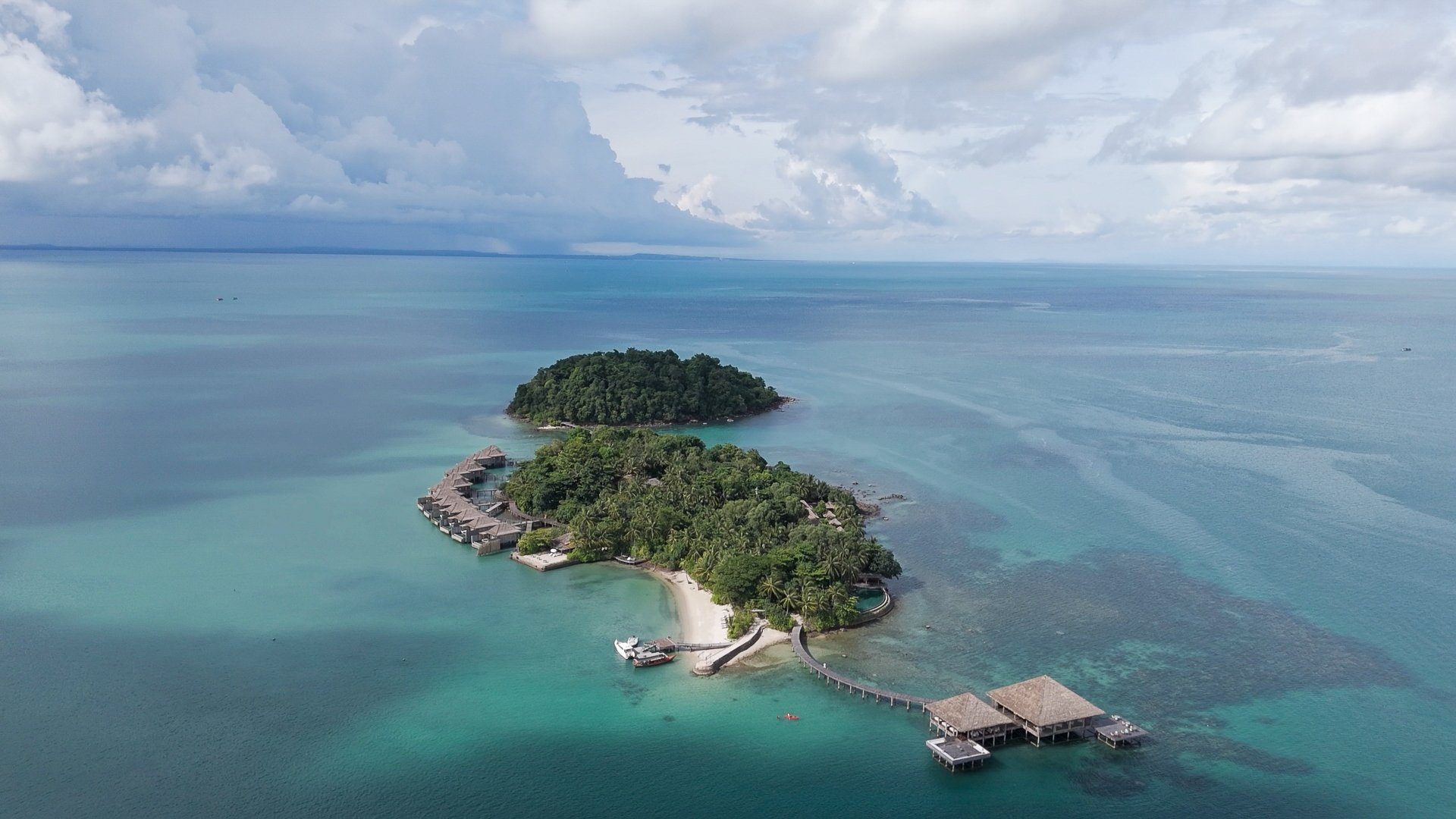
Song Saa Private Island from the drone
In June I worked as shooting producer on a short film about the Song Saa Collective in Cambodia’s Koh Rong Archipelago. Regenerative Tourism is part of Pacific Asia: Tourism with Purpose, a digital series that the UK production company Content With Purpose produces for the Pacific Asia Travel Association (PATA).
The film looks at how Song Saa Private Island, a resort off the Cambodian coast, funds the marine conservation and community work of the Song Saa Foundation. I was on the job with Vicheka, my long-term assistant, who has worked with me on a lot of shoots.
A change of plan on Thursday evening
The shoot came together at short notice. One of the people due to be featured had returned to their home country for family reasons, so I had a call with Content With Purpose and Melita Koulmandas, the founder of the Song Saa Collective, on the Thursday evening to work out what to do. Morokot Long, the Song Saa Foundation’s marine conservation and community engagement officer, agreed to step in. A holiday was coming up and she was due to travel back to her hometown, so we had to film before she left.
We made the final decision that evening. I packed the kit that night, started prep at 5.45 the next morning, and Vicheka and I were in a taxi out of Phnom Penh at 6am. At the coast we took Song Saa’s speedboat out to the island, and we filmed on Friday 19 and Saturday 20 June.
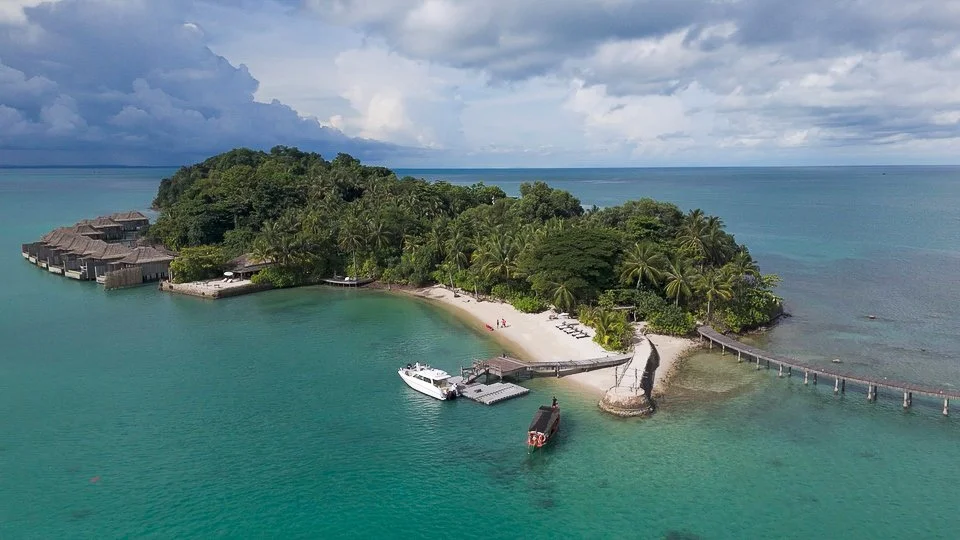
Arriving at Song Saa Private Island
I arrived slightly discombobulated, convinced I’d lost an hour somewhere. Song Saa runs on Hong Kong time, an hour ahead of the rest of Cambodia, so the island’s clocks and mine weren’t aligned.
Working with Content With Purpose
Content With Purpose specialises in ethical production. To keep the carbon footprint of its shoots down, it hires local crews rather than flying people in, which is how the job came to me in Phnom Penh. The production manager was Amy Allport.
Three interviews, two cameras
Content With Purpose wanted a two-camera interview setup, and I ran the interviews myself. The Sony A7 IV was A camera, with the A7S III on the second angle. I lit with a Zhiyun Molus X100 and recorded sound from a Sennheiser MKH 416 on a boom and a Sennheiser G4 radio mic, both going into the Sony XLR-K3M adapter, belt and braces.
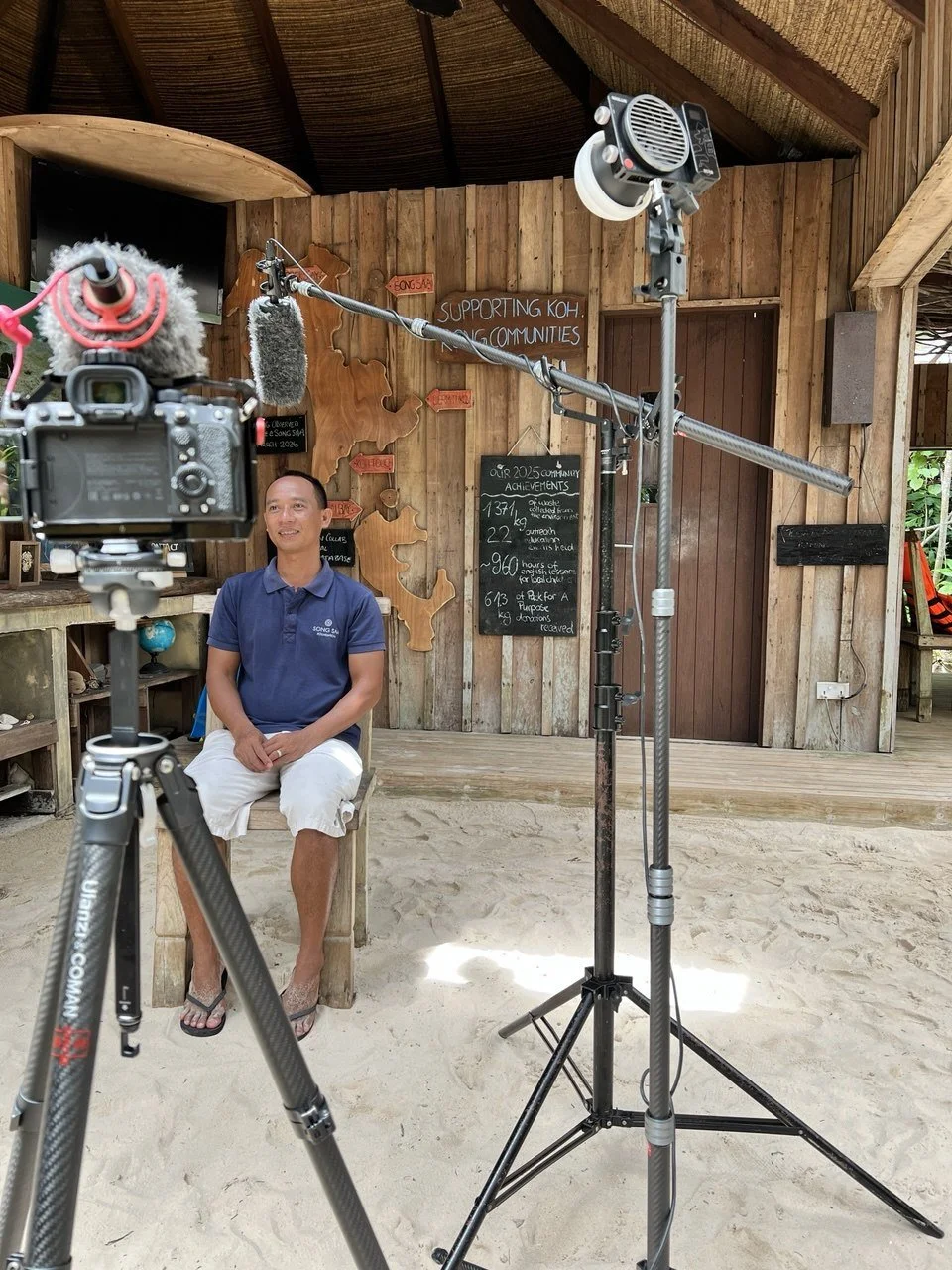
The two-camera setup for Sideth Chun’s interview at the Discovery Centre.
Melita Koulmandas, Song Saa Collective
Melita Koulmandas is the founder and CEO of the Song Saa Collective. We interviewed her in one of the island’s villas, a stilt house looking out over the sea.
“I first found myself out here 20 years ago, in 2006,” she says. “When I first arrived, you could see what on the surface appeared to be this incredible, stunning, pristine environment was very rapidly in decline. Fish stocks had been pushed close to collapse. It was becoming more and more challenging for these fishing communities to provide for their families.”
She started working with the local community and the fisheries, and the house reef around Song Saa became, in her words, “the starting point for Cambodia’s first marine reserve.” The Song Saa reserve was the first marine reserve to be registered in Cambodia.
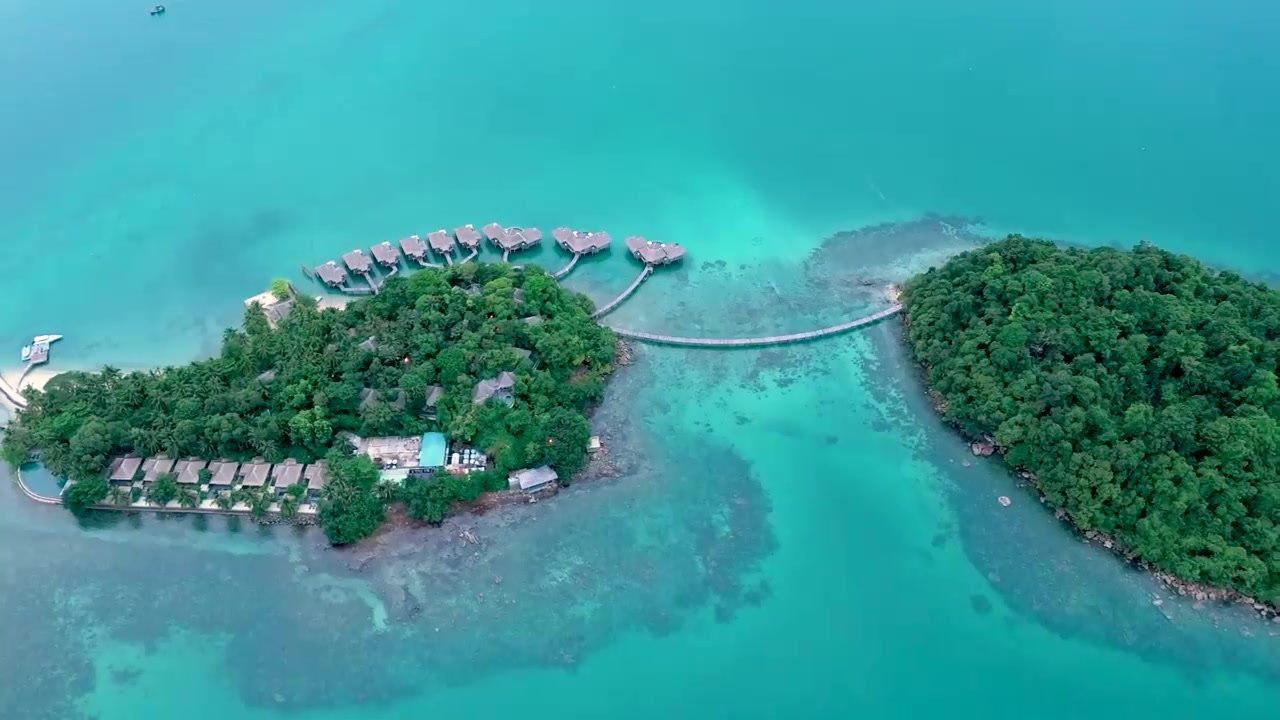
The two islands of Song Saa and the house reef between them
“Within 18 months we saw the fish stocks start to come back,” she says. “We saw baby barracudas, we saw spotted stingrays, and I was able to witness regeneration happening in real time.”
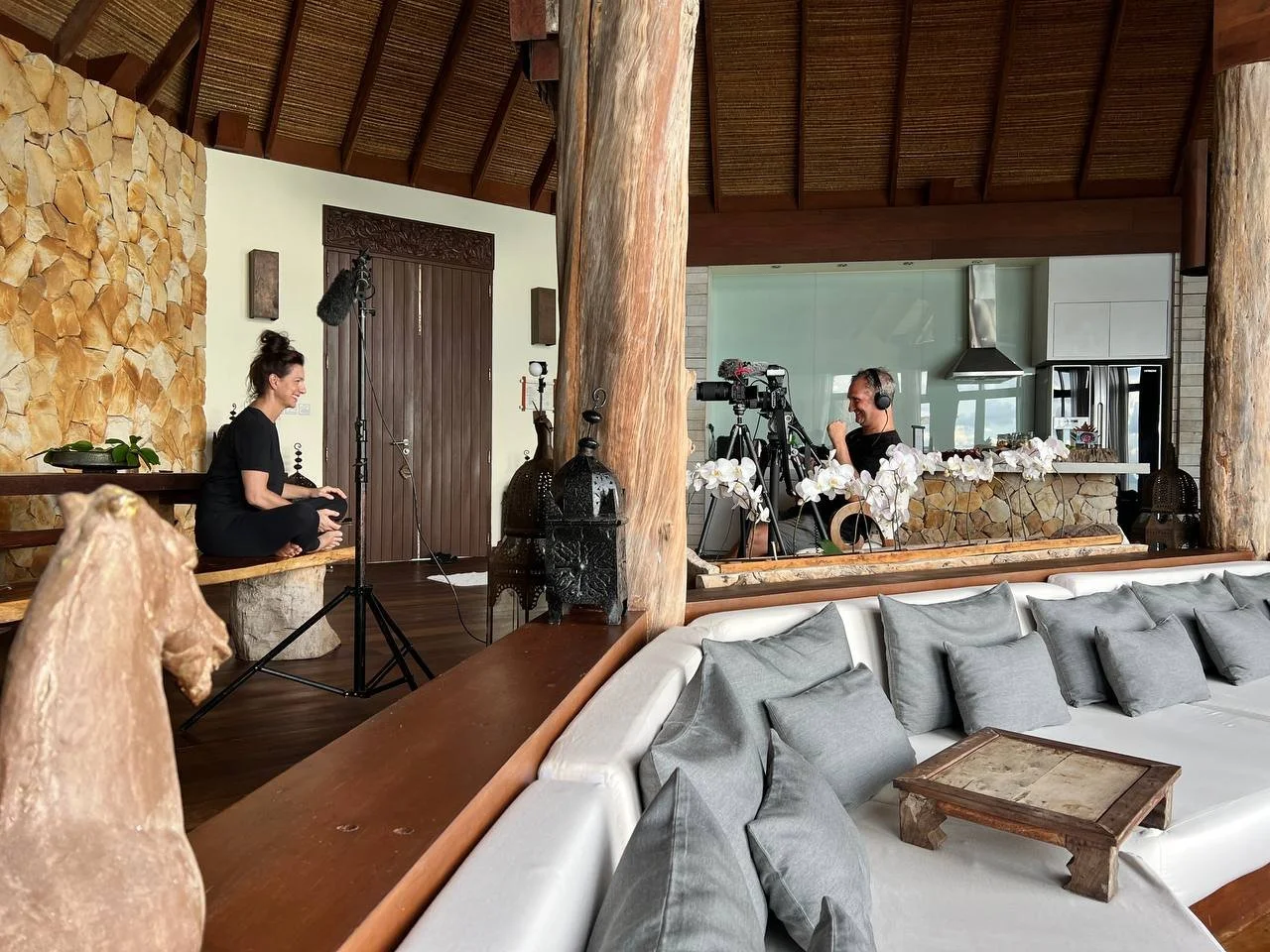
Interviewing Melita Koulmandas in one of the villas on Song Saa Private Island.
Morokot Long, Song Saa Foundation
Morokot’s interview was shot on the beach in the late afternoon, with the sea as a backdrop. She runs the foundation’s seagrass surveys, which she describes as “very detailed, metre by metre.”
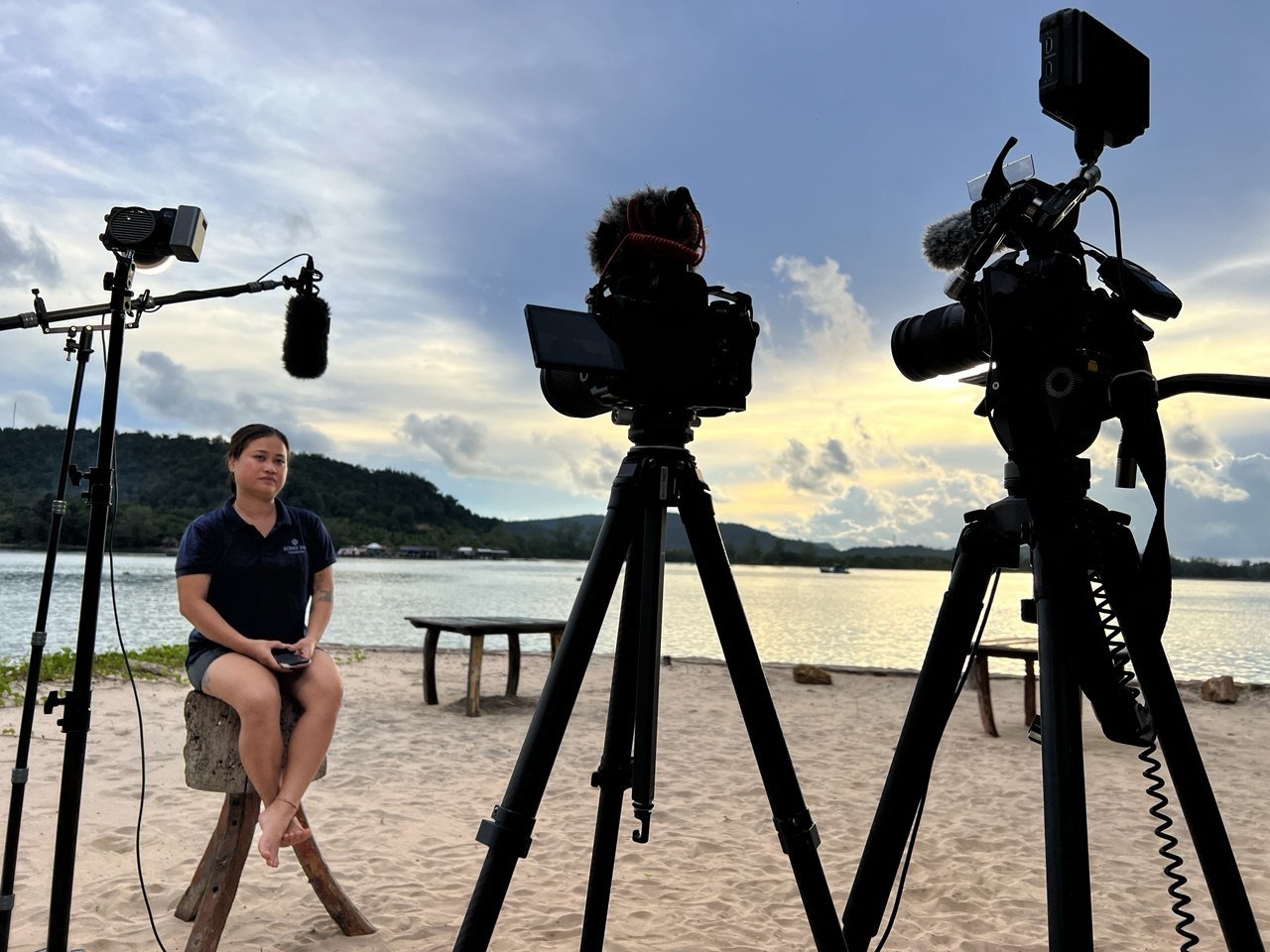
Setting up Morokot Long's interview on the beach as the sun sets.
“Seagrass bed is one of the most important marine habitats,” she says. “It sustains a lot of life. It acts as a nursery ground for the juvenile fish, protects our coastline from waves and erosion. It also acts as a carbon sink.”
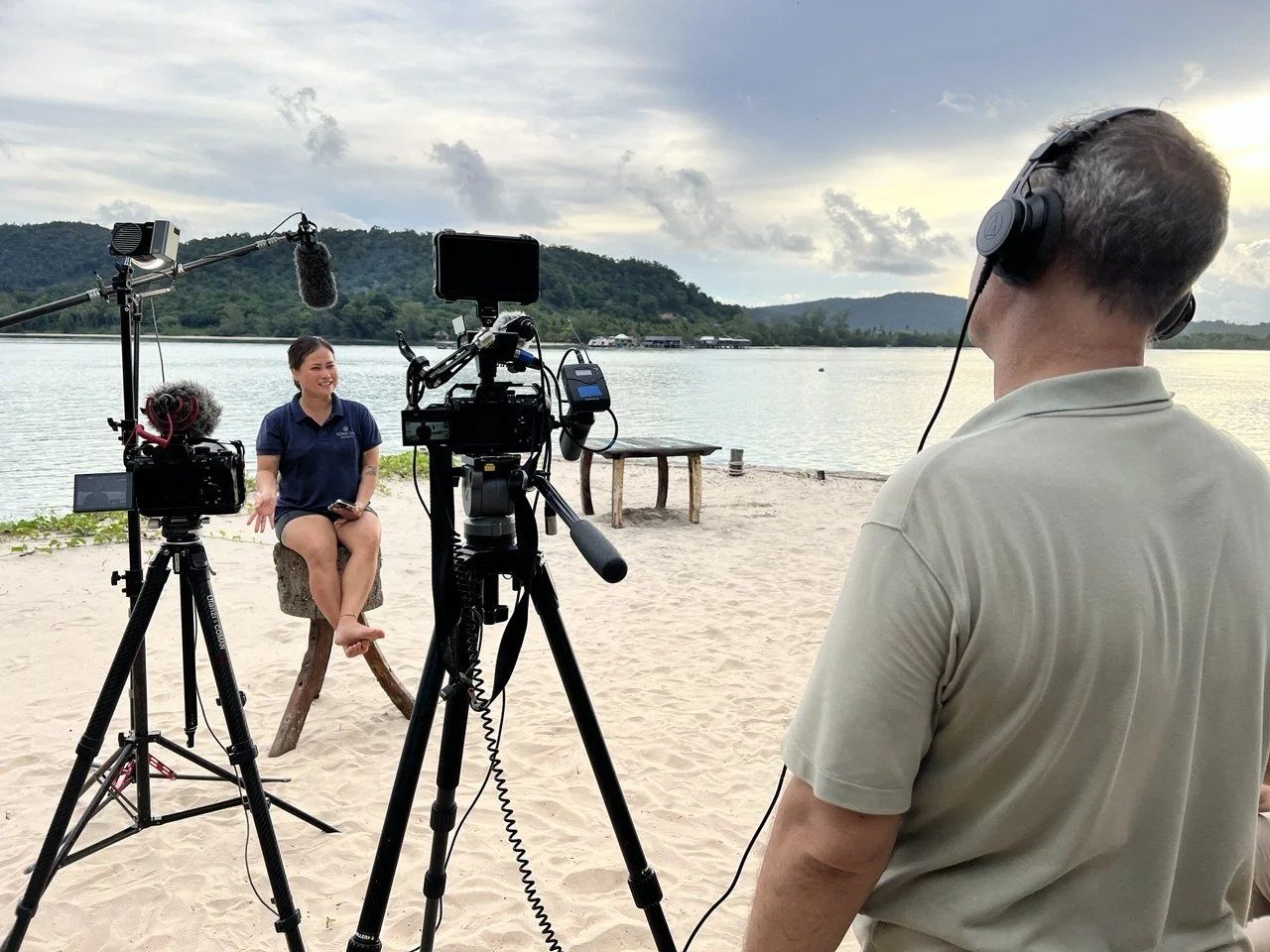
Morokot Long on the beach, with the second camera on the left.
Sideth Chun, Song Saa Foundation
Sideth Chun is the foundation’s community liaison officer, and we filmed his interview at the Discovery Centre. Morokot told us he’d recently qualified as a scuba diver. “When the local community takes this as their ownership, people like to protect what they care about and what they love,” Morokot says.
Sideth runs workshops on coral species for children in the community and takes them swimming. “They see the coral growing and they’re really interested,” he says. “They said they want to be like the part of the marine science and take care of their own marine environment.”
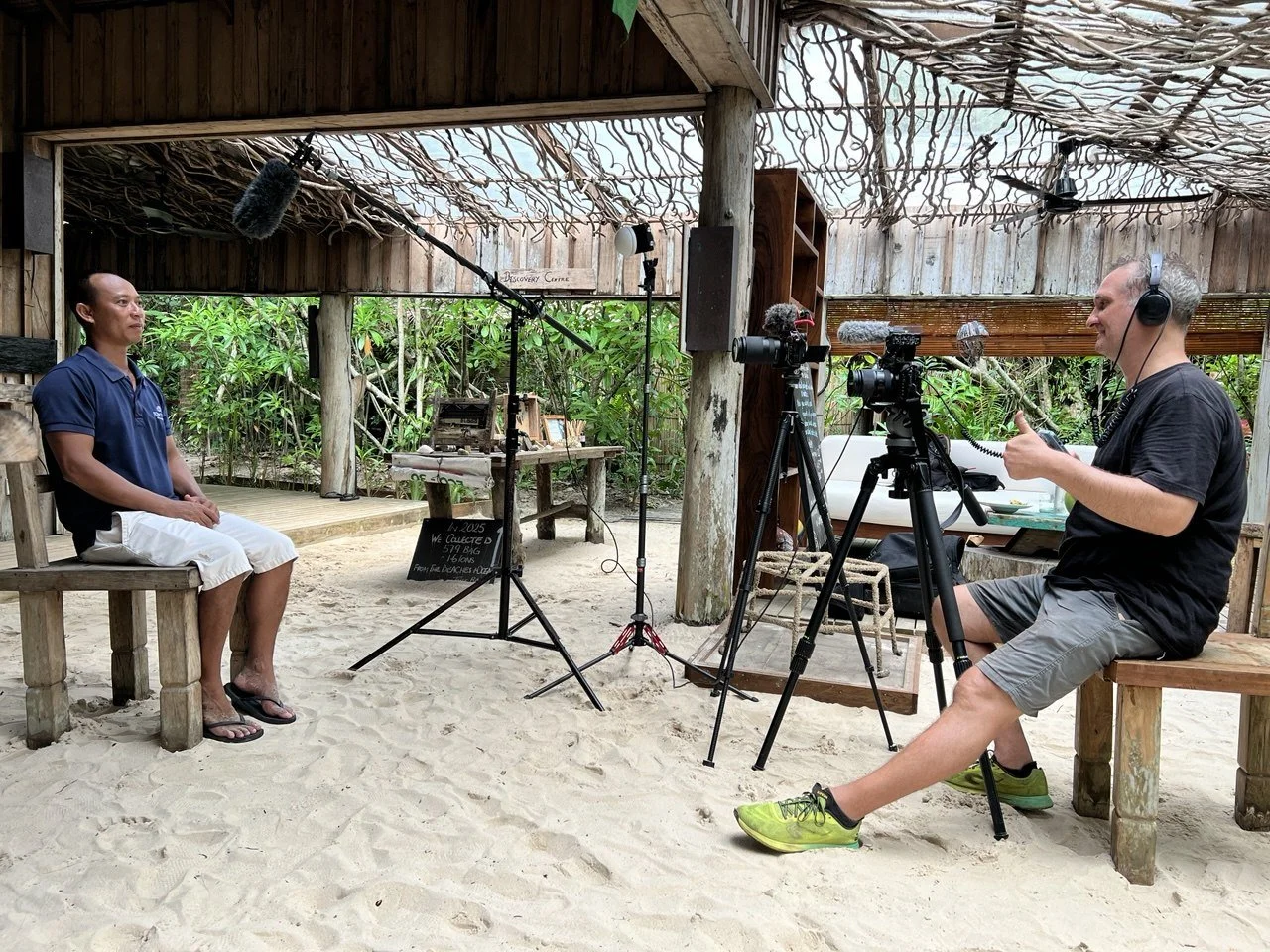
Interviewing Sideth Chun at the Discovery Centre.
On the water and in the air
Between interviews, we went out on the foundation’s boat with Morokot, Sideth and the dive team as they kitted up. I used the A7S III on the gimbal for the moving shots on the boats.
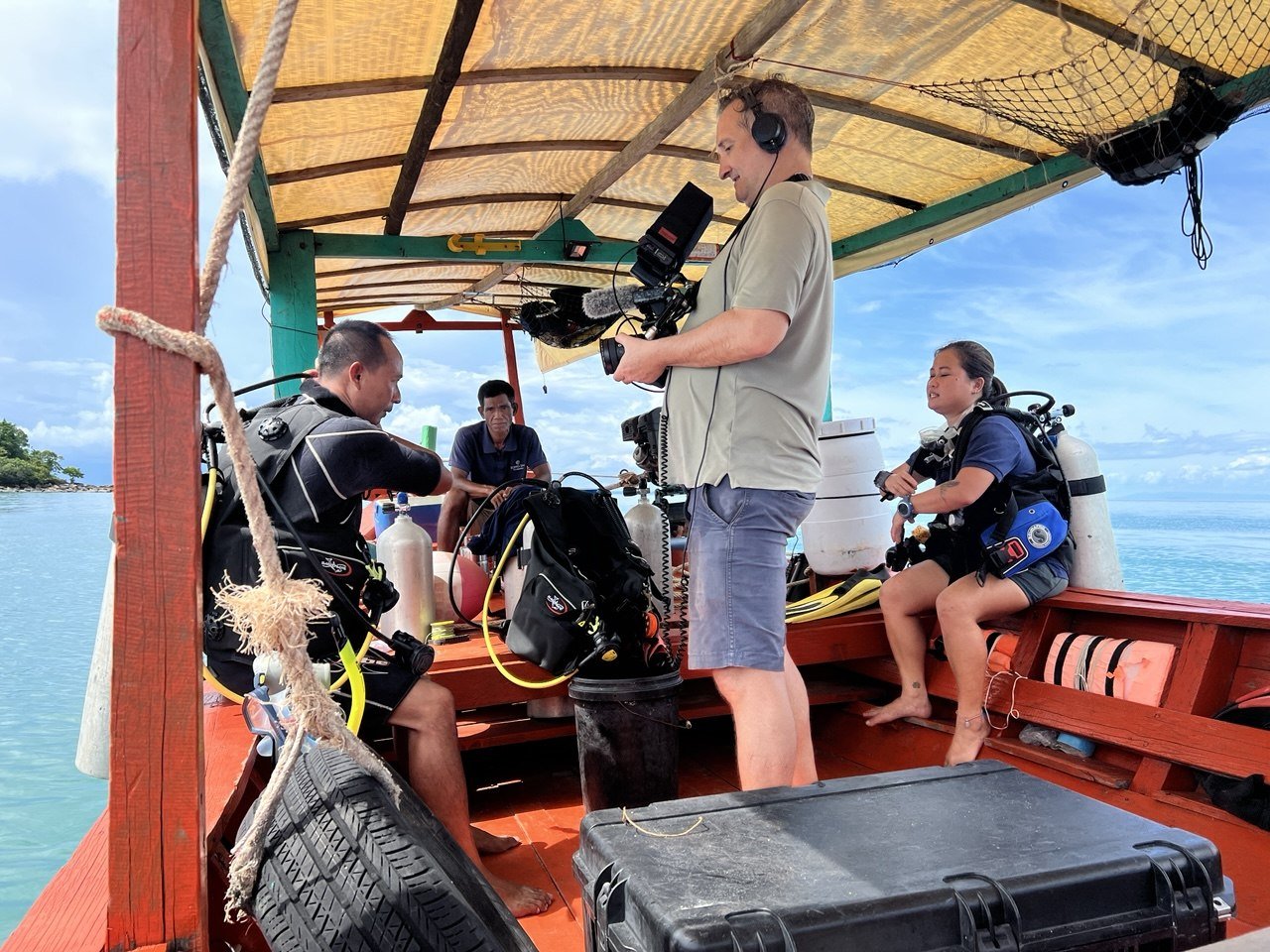
Filming the dive team as they kit up.
I shot the aerial footage on the DJI Air 3, covering the island, its boardwalk and the house reef. I’ve written more about flying drones in Cambodia and the permissions involved.
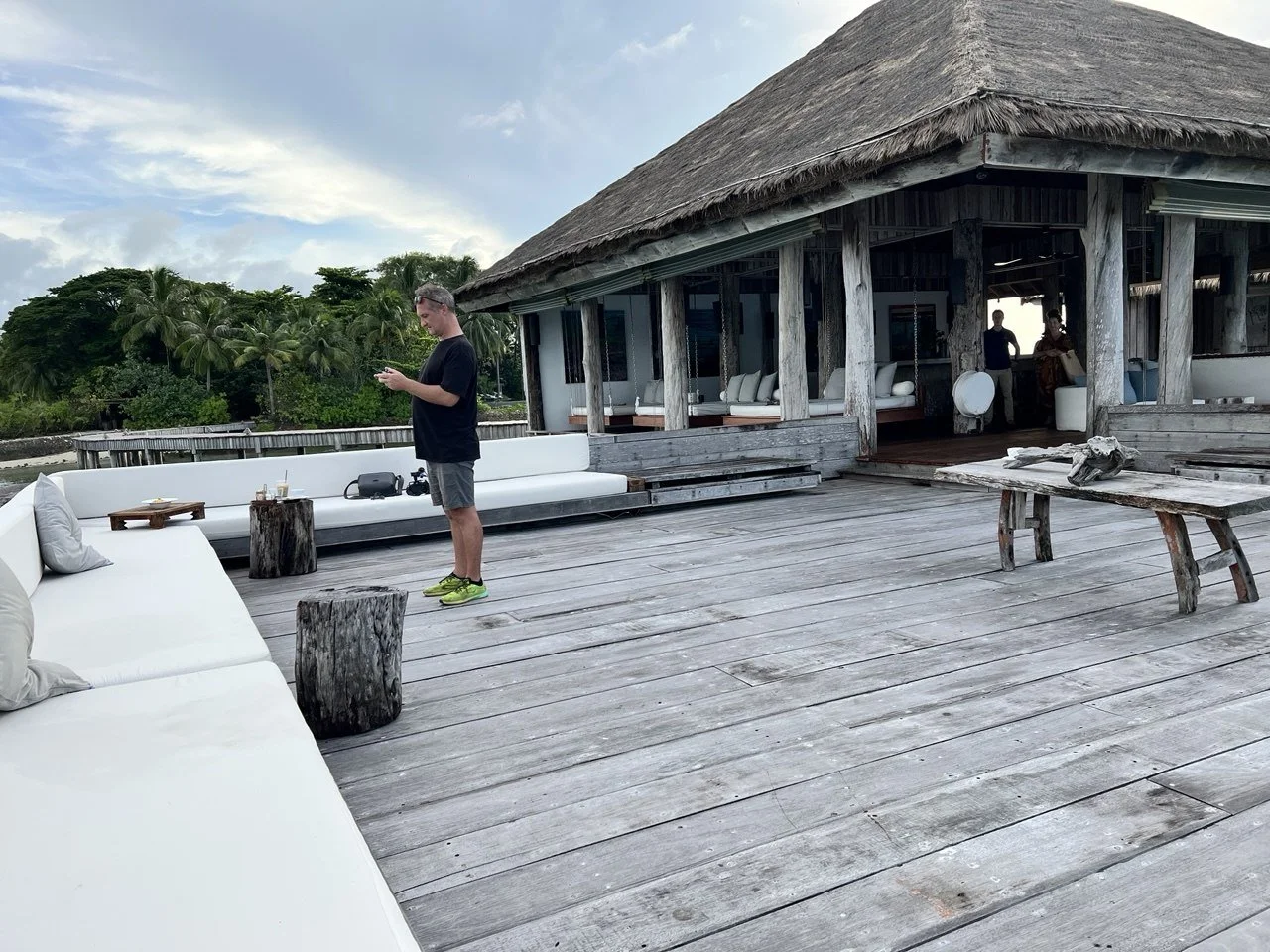
Flying the Air 3 from the deck on Song Saa Private Island.
Tourism that pays for conservation
Six years after Melita first arrived, she designed and built Song Saa Private Island to support the conservation work, alongside an international not-for-profit foundation.
“The resort commercial business became the engine,” she says. “It provided infrastructure for the conservation work, provides housing for the marine scientists and the team to live in. It brings awareness to this area through media and PR. And then through guest donations, grants, fundraising through the foundation, we’re able to conduct data-driven research.”
It’s the same link between visitors and conservation that I saw on the Tonle Sap, where protected bird sanctuaries bring income to communities through eco-tourism. Melita summarises this perfectly at the end of the film: “Tourism has to move from extraction to contribution.”
Staying on the island
It’s not often I get to stay somewhere like Song Saa, and I think Vicheka enjoyed it even more than I did. We didn’t have time to make much use of the island’s facilities, but we did eat at the restaurant. My highlight was an Asian-style confit duck salad with green mango, where the acidity of the mango cut through the saltiness of the duck.
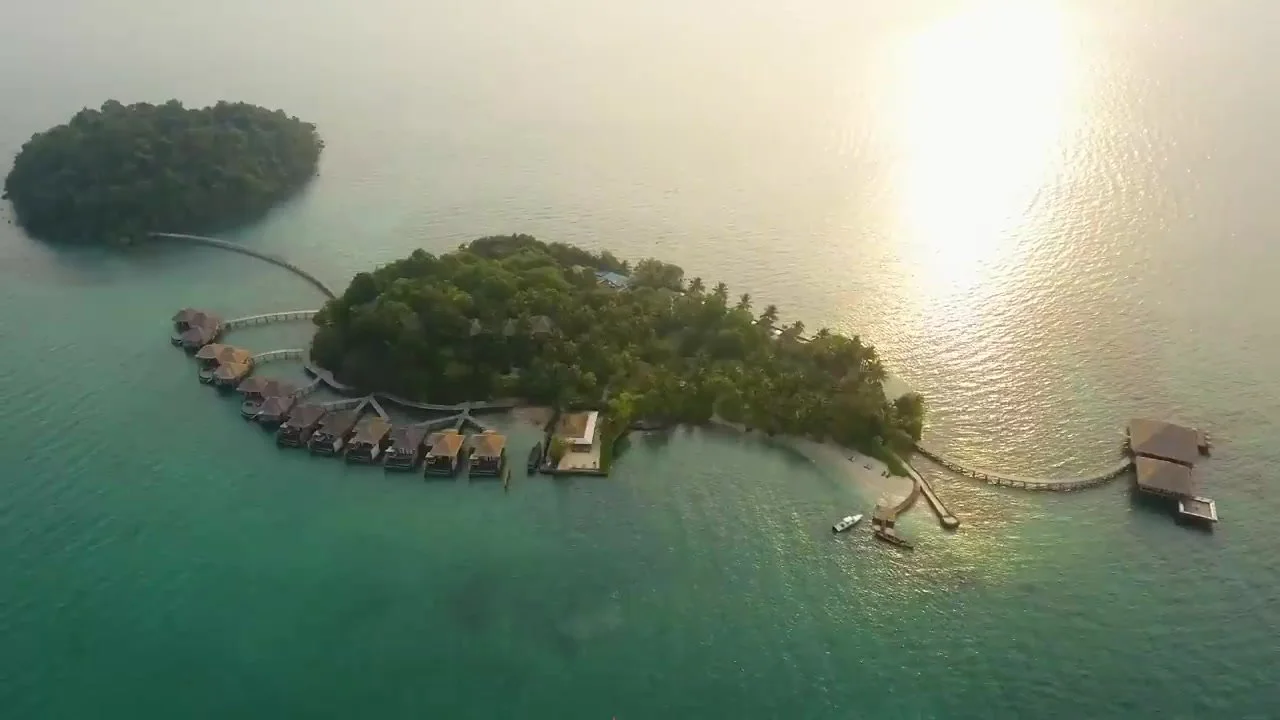
The overwater villas on Song Saa Private Island.
Handover and release
At the end of the shoot, I uploaded all the footage to Content With Purpose’s Drive for the edit. Pacific Asia: Tourism with Purpose was previewed at PATA Travel Mart 2026 and launched in Bangkok on 8 September 2026. The films are free to watch on Content With Purpose’s site, alongside partners including the Hawai’i Tourism Authority and Travelife.
Thanks to Melita, Sideth and the Song Saa team, and to Morokot for stepping in at short notice. If you’re after a shooting producer for a travel or conservation story, I’ve also produced, directed and shot segments for the BBC Travel Show. You can see more of my work as an NGO videographer in Cambodia.
Working on something similar? Drop me a line, I’d be happy to discuss how I can help.
Flying Drones in Cambodia: Permissions, Experience and What You Need to Know
I’ve been working as a drone operator in Cambodia since shortly after DJI launched the original Phantom in 2013. This post covers getting permission to fly in Phnom Penh and at the Angkor Archaeological Park.
Drone showreel, aerial videography across Cambodia
I've been working as a drone operator in Cambodia since shortly after DJI launched the original Phantom in 2013. Since then I've flown the Phantom 2, 3, 4 and 4 Pro, the Mavic Pro, Mavic Pro 2, Mini 3 Pro, and now the DJI Air 3. I've used drones on productions ranging from NGO field work and corporate videos to broadcast documentary and feature film. The progress in that time has been remarkable, with the introduction of dual lenses, omnidirectional obstacle sensing, extended battery life, and stabilisation that makes aerial footage possible in conditions where earlier models simply couldn't fly.
This post covers the two locations where you'll definitely be asked for permission, Phnom Penh and the Angkor Archaeological Park, along with some notes on indoor flying, drone photography, and some highlights of my drone flying in Cambodia.
Flying in Phnom Penh
For television and documentary productions, the permissions process in Phnom Penh is a two-stage process. You apply first to the Ministry of Information, which processes the permit. You then take that letter to City Hall, where they countersign and confirm that you have approval to fly within the capital. If you're making a feature film, the Ministry of Culture and Fine Arts is the relevant authority.
When I was flying for CNN's Nomad with Carlton McCoy, the local fixer gave me a copy of the permission letter, which was a good idea. Every time I took off, a security guard arrived and asked to see the permission. You will be asked to show your paperwork when openly flying in central Phnom Penh, so make sure you have it.
People have been detained for flying in restricted areas, and some incidents are well known in the production community here. For professional work in Phnom Penh, obtaining permission before you fly is not optional.
At the time of writing, there is a blanket ban on drone flights across Cambodia as a result of the Thailand-Cambodia border situation. Permissions are still being granted for the right projects, but this is worth factoring into your planning if you're scheduling a drone shoot in the near future.
Flying at the Angkor Archaeological Park
Angkor operates through the Apsara Authority, the body responsible for managing the archaeological park. You apply in writing and the process typically takes between two weeks and a month. The Apsara Authority will confirm whether permission is granted and advise on the fee, which is set case by case rather than at a fixed rate.
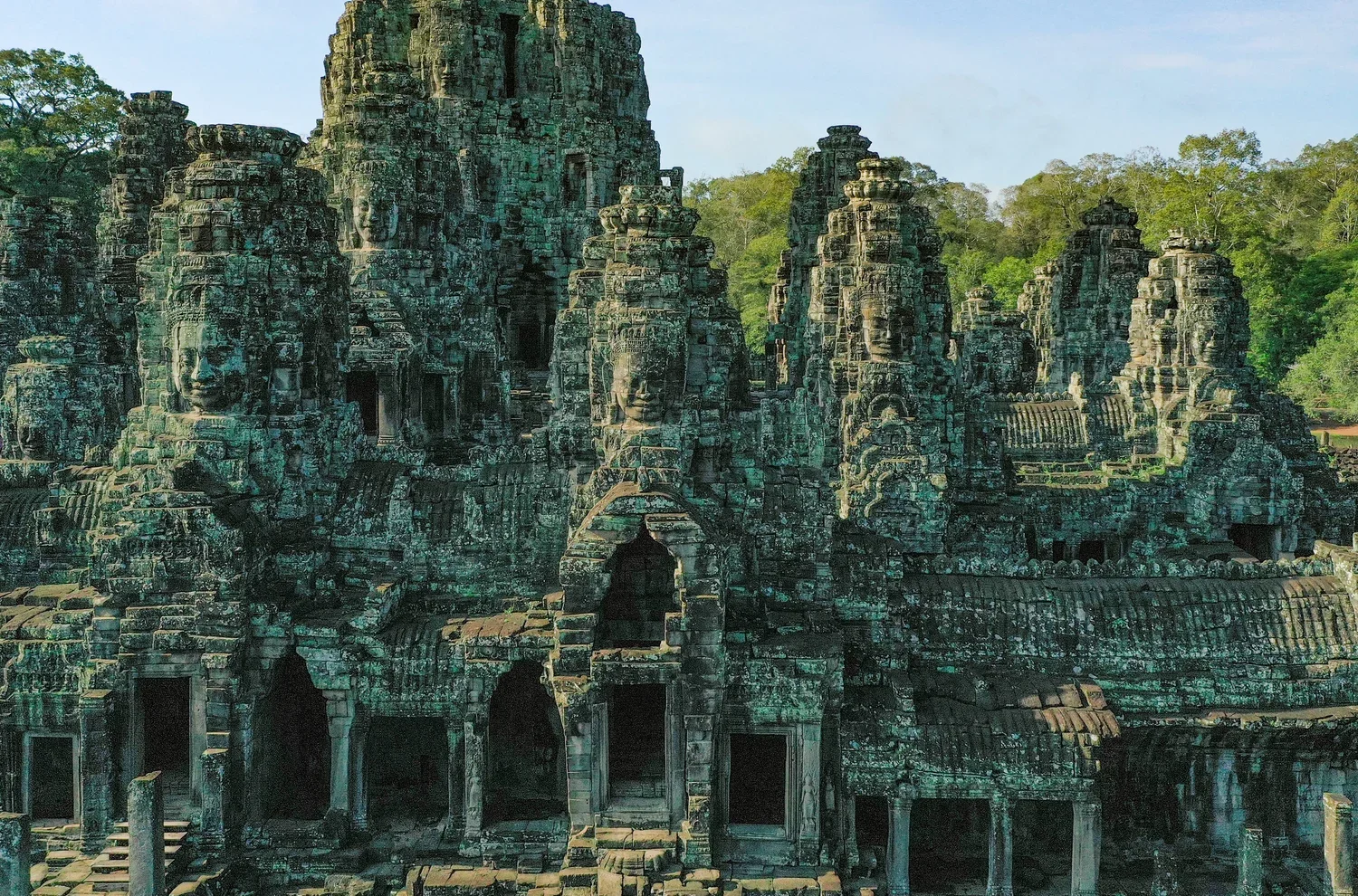
I've been lucky enough to fly my drone at the temples twice. The first was for Taste of Cambodia, a travel series for the Cambodia Ministry of Tourism produced with Hanuman Films, where I had a three-day permit covering Angkor Wat, Angkor Thom and Ta Prohm, the temple featured in Tomb Raider. The second was for CNN's Nomad with Carlton McCoy, shooting at Angkor Wat.
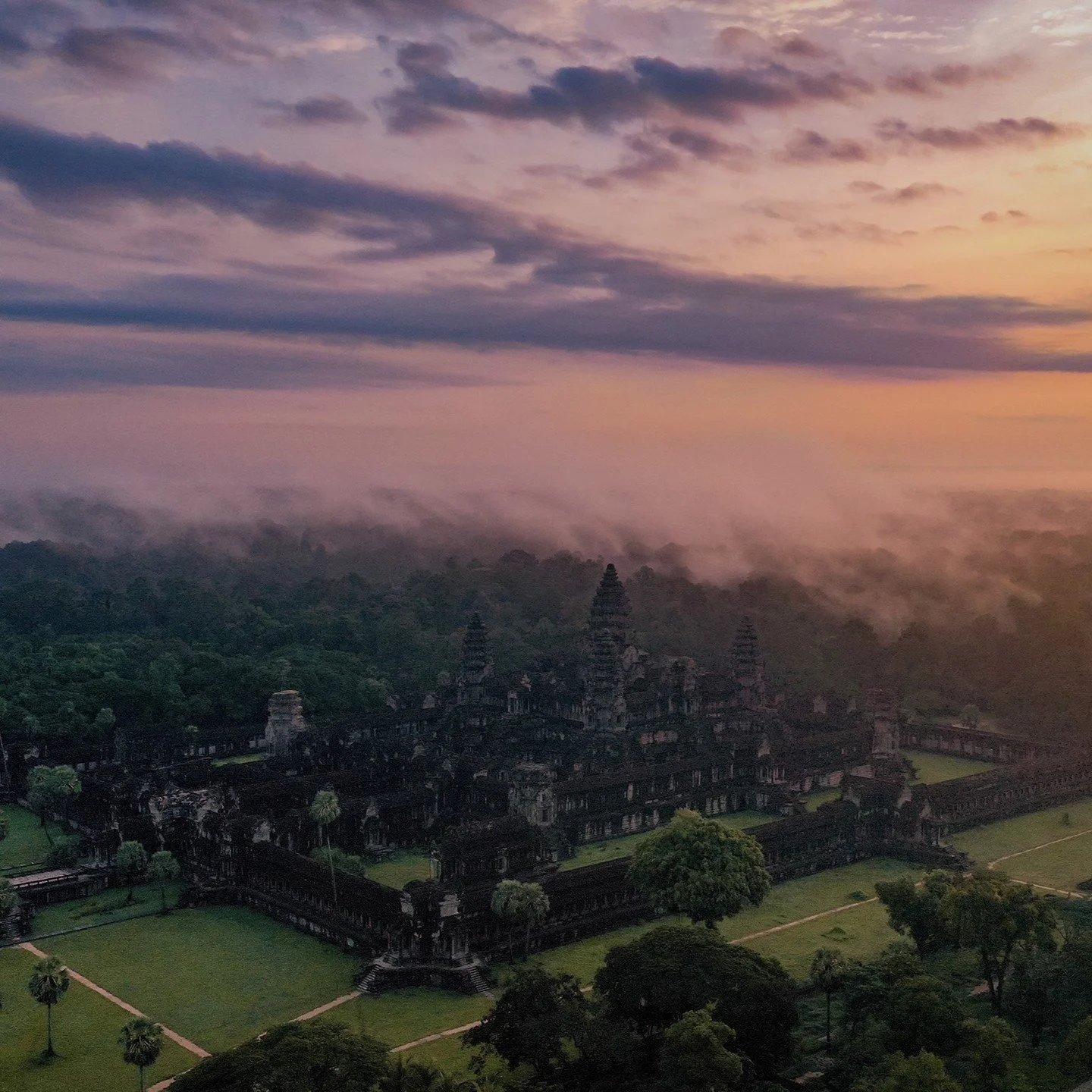
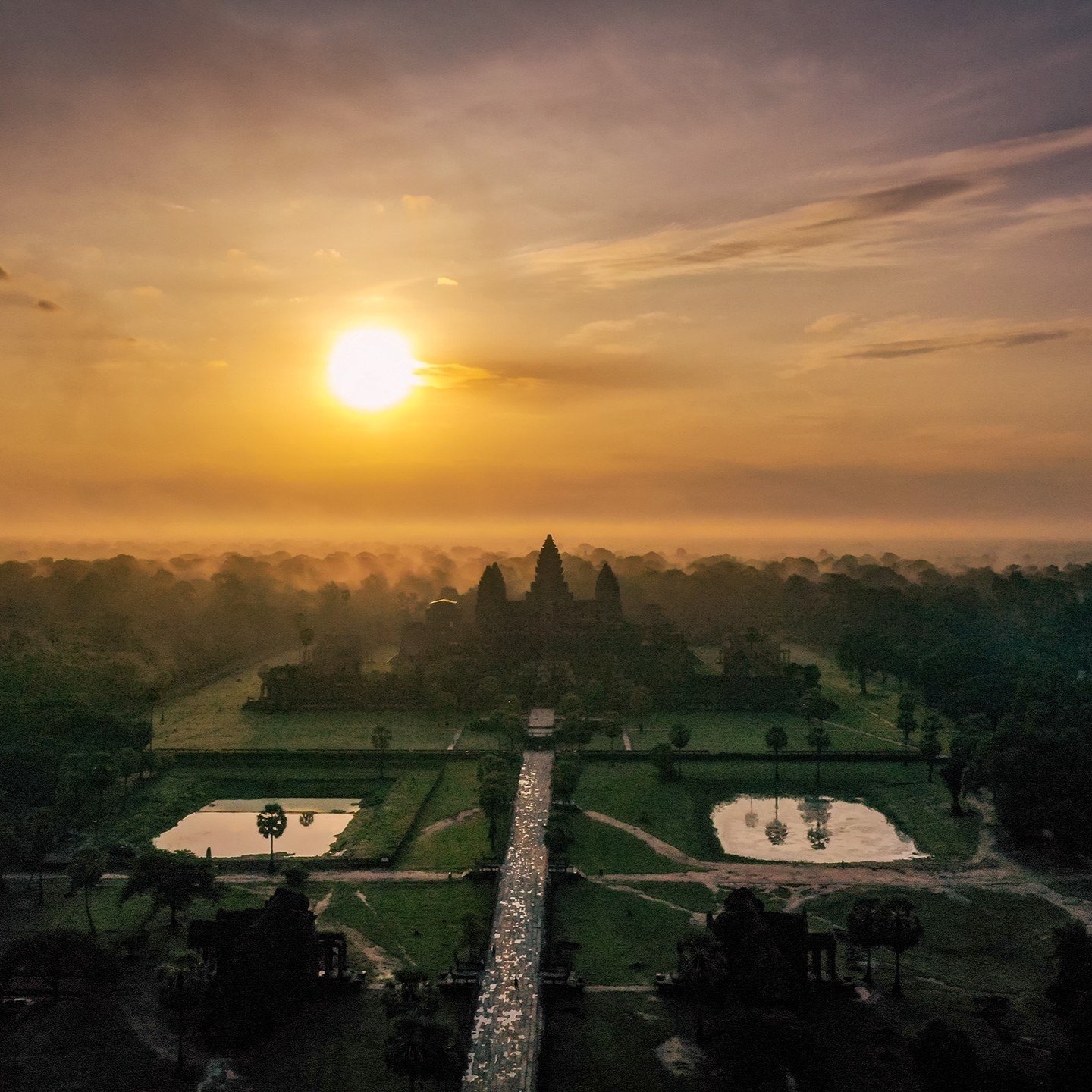
I was up before sunrise on the first two mornings of the Taste of Cambodia shoot at Angkor Wat, waiting for light that never came through the cloud. On the third morning it had rained overnight and, as the sun rose, mist lifted from the stone path leading up to the temple and the surrounding jungle. The footage from that morning made up for the earlier disappointments, and it's the kind of image that's only available if you have the right permissions and the patience to wait for the conditions to arrive.
Indoor Drone Work
Part of the drone work I do has been flying inside buildings, which is a different discipline from outdoor flying and one that demands a drone with reliable obstacle sensing.
For a corporate film for Endo Lighting, I flew inside AEON 3 Mall in Phnom Penh to capture their lighting installation. Flying up through the full height of the central atrium and along the skywalk, a key part of the design they wanted to show, gave the client footage that couldn't have been achieved any other way. You can see the video here.
For a video produced with Pixel Peers for the ILO's Better Factories project, I flew inside a garment factory in Kandal Province on the outskirts of Phnom Penh, documenting the manufacturing environment as part of their Better Factories programme.
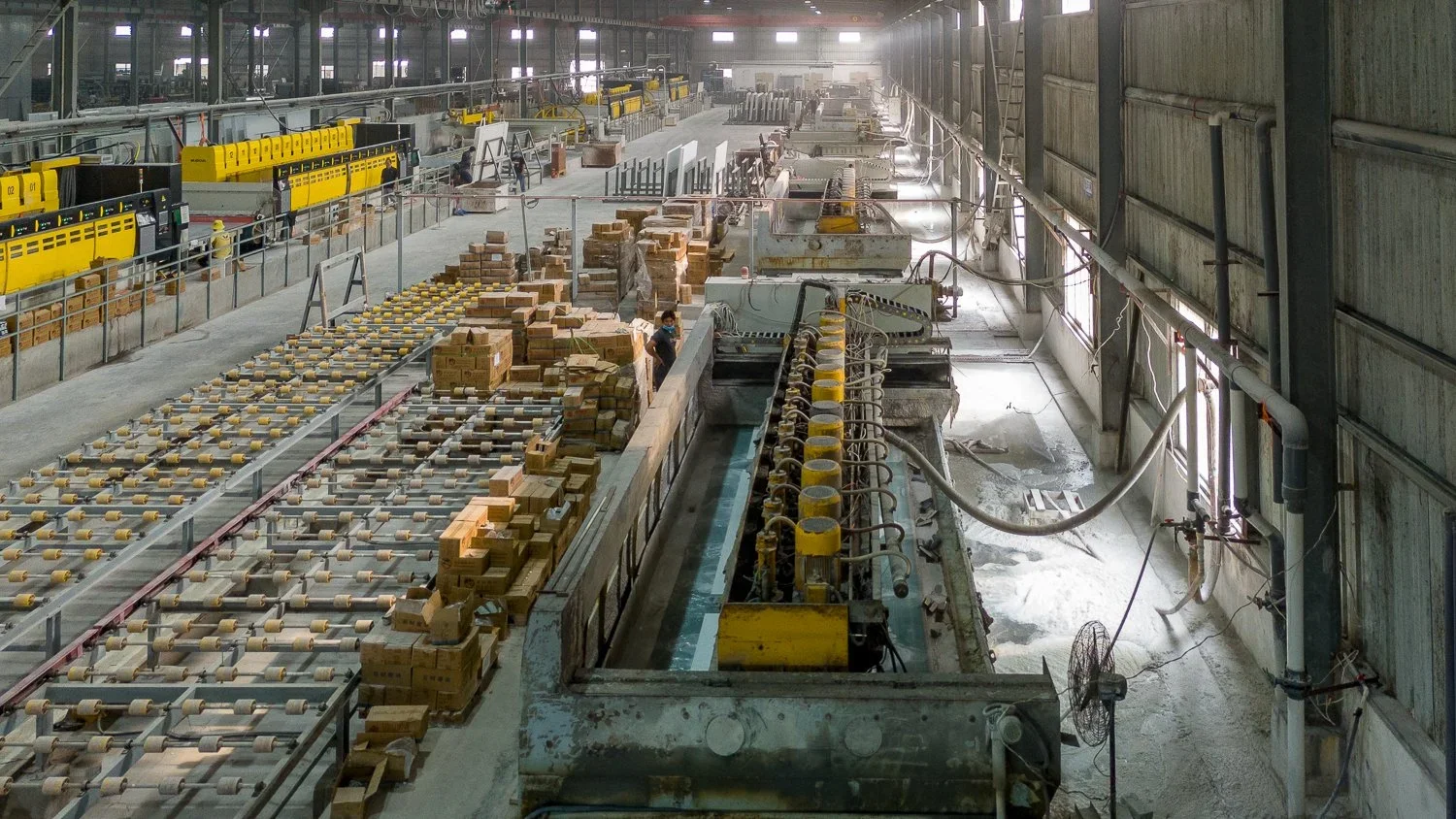
I also flew inside Cambodia Zulite Stone's quartz manufacturing facility for a corporate film delivered for exhibition at a trade show in New York. The DJI Air 3's omnidirectional obstacle sensing makes it well suited to indoor work of this kind.
On a number of shoots, drone photography has been delivered alongside the video. The Air 3 and many other DJI drones make switching between modes straightforward. You press the left-hand shoulder button and it switches between photography and video. Once the settings for both are configured, it's easy to switch at the click of a button, and then another click either takes a photo or starts recording. Stills and video can be captured in the same session without significantly disrupting the shooting workflow. Both Endo Lighting and Cambodia Zulite Stone received drone photography deliverables alongside their films. Drone stills are something I can offer alongside videography on most shoots.
Flying Across Cambodia
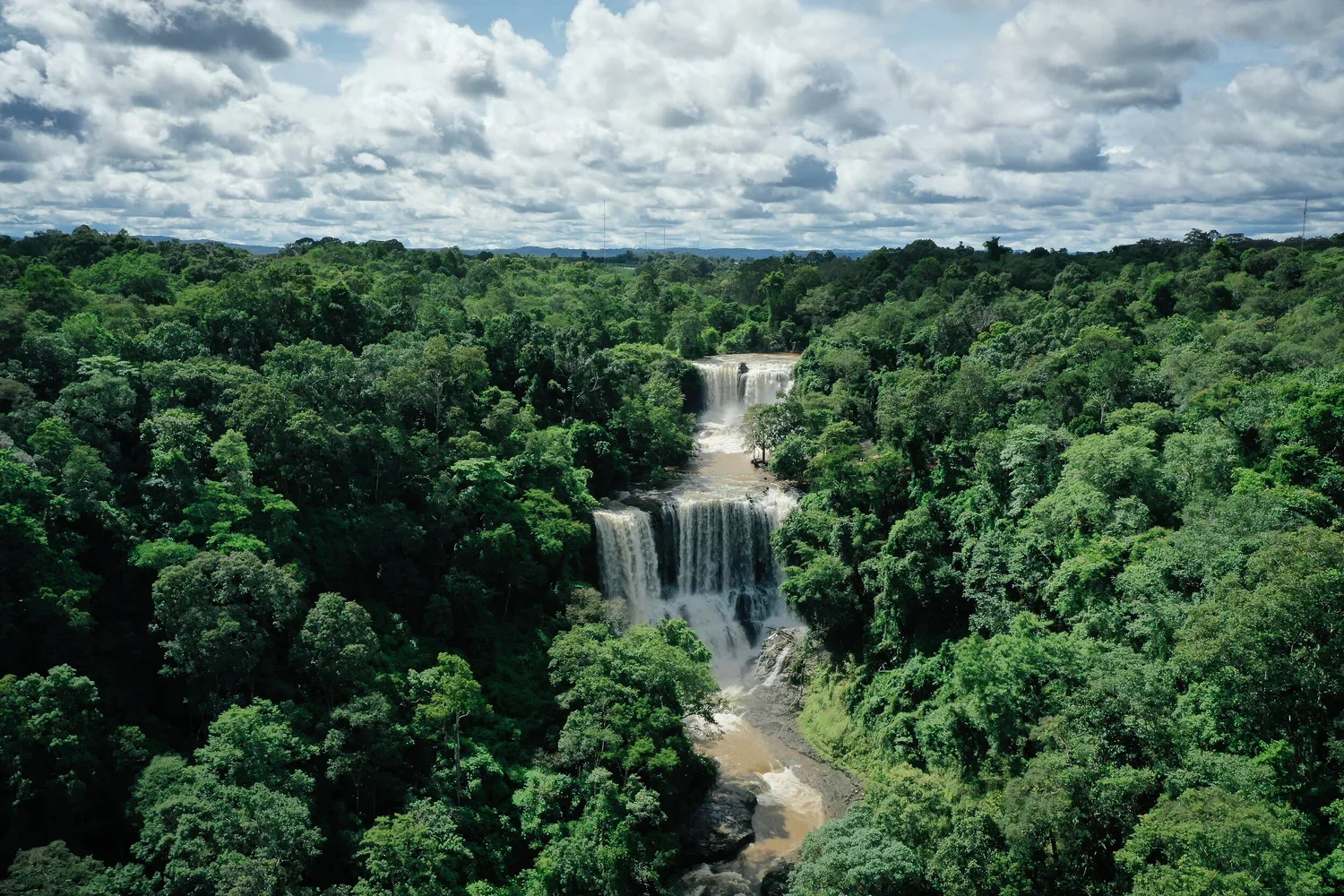
Across Cambodia as well as Phnom Penh and Angkor, I've flown for a wide range of productions. Locations include Kampot and Kep on the coast, the highlands of Mondulkiri, Kratie, Stung Treng, Battambang and Kandal Province. Outside the capital and the archaeological park, enforcement is lighter and I've never been stopped when flying recreationally, though technically a local authority approval from the relevant sangkat is required alongside the Ministry of Information permit for professional productions.
Productions involving significant drone work include a 46-minute documentary for CNA Insider on the Funan Techo Canal, where I flew over the Mekong River, Battambang's rice paddies and the Phnom Penh Autonomous Port, and the Taste of Cambodia series for the Ministry of Tourism. For the CNN shoot I flew Central Market, Wat Phnom, Vattanac Tower, the CBD and the Angkor temples. For Wild Frontiers, one of the UK's leading adventure travel companies, I flew across India, Ukraine and Moldova. You can see a selection of that aerial work in my drone reel for Khreativa.
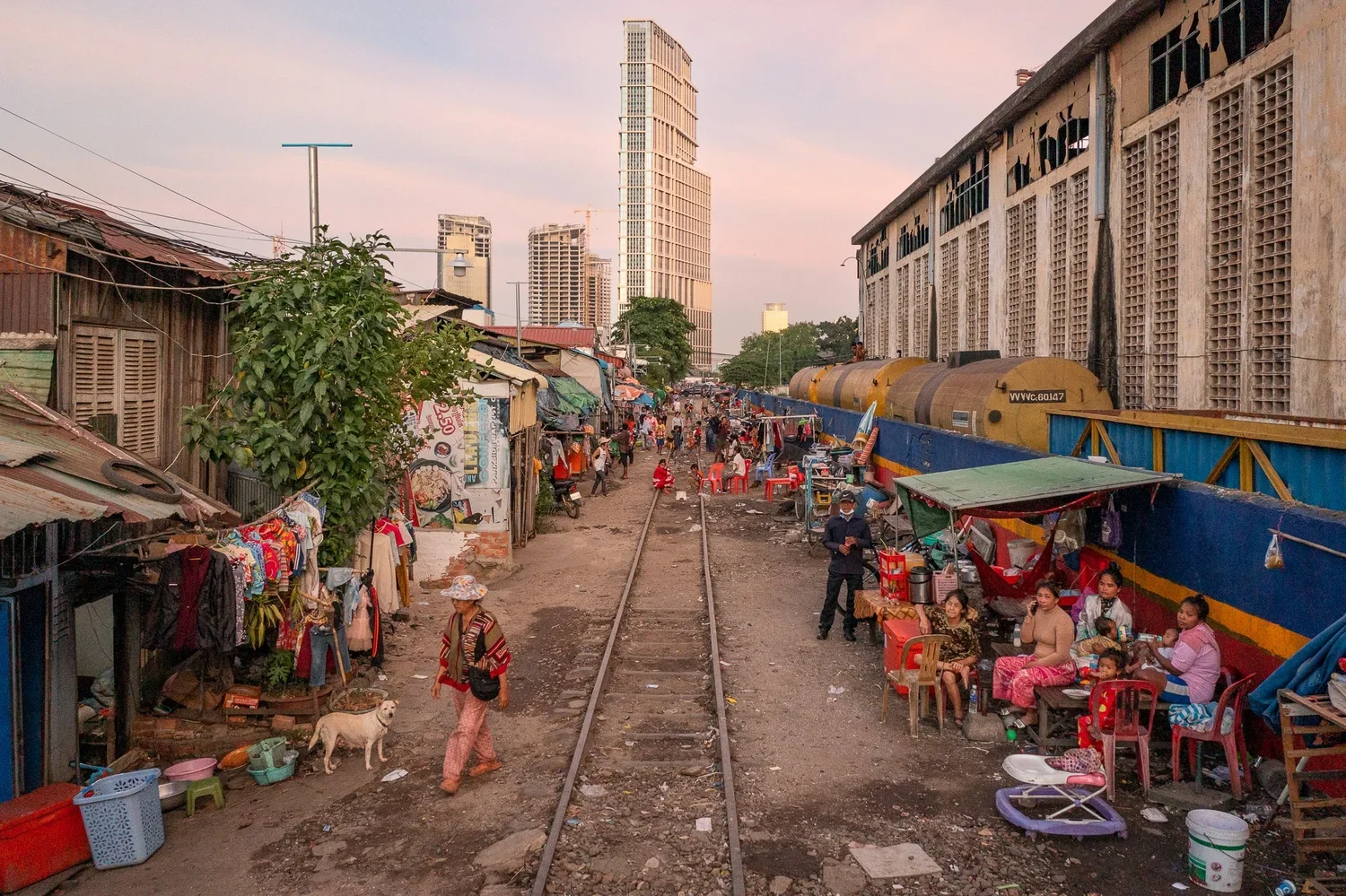
Cambodia as a Production Destination
The Cambodia Tourism Board recently launched a Location Scouting Programme designed to support international film, television, documentary and commercial productions. The programme covers up to five days of on-ground expenses during location scouting, including accommodation, local transport, fixer or guide services, and entry fees for national parks and heritage sites. Flights are not covered, but it's an encouraging development that reflects a genuine effort by the Cambodian government to attract international productions to the country.
Kit
My current drone is the DJI Air 3, with 28mm and 70mm lenses and omnidirectional obstacle sensing, suitable for both indoor and outdoor work. Additional drones are available to hire for productions requiring different specifications. Full production kit, including lighting, sound and grip, is available alongside drone services.
You can see more of my drone work on the drone operator page, and further examples across the corporateand documentary portfolio pages.
If you have questions about flying drones in Cambodia, whether for a production you're planning or just to understand the permissions process, feel free to get in touch. Based in Phnom Penh and available for assignments across Southeast Asia.