

Photographing Conflict Damage at Preah Vihear Temple for the Australian Financial Review
In mid-September I travelled to Preah Vihear temple in northern Cambodia as photographer and video journalist, working alongside the journalist and author Nick Ray. The UNESCO World Heritage Site sits on a clifftop on Cambodia’s border with Thailand and had been closed to visitors since the fighting in July and December 2025.

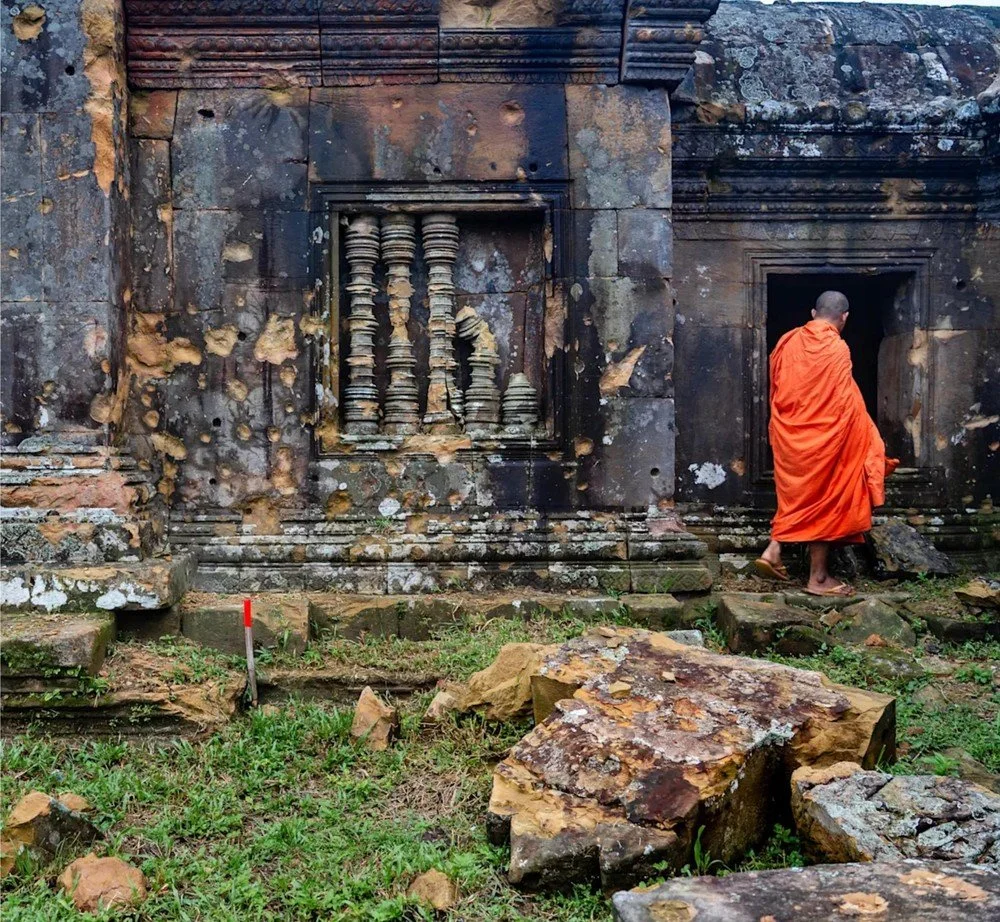
Abbot Sun Sang in the ruins of Wat Keo Sekha Kiri Svarak, the pagoda on the mountain at Preah Vihear. © George Jefferies
In mid-September I travelled to Preah Vihear temple in northern Cambodia as a photojournalist and video journalist, working alongside the journalist and author Nick Ray. The UNESCO World Heritage Site sits on a clifftop on Cambodia's border with Thailand and had been closed to visitors since the fighting in July and December 2025. Nick's story, illustrated with my photographs, ran in the Australian Financial Review's Weekend Fin magazine, online on 15 October and in print on 17 October 2026.
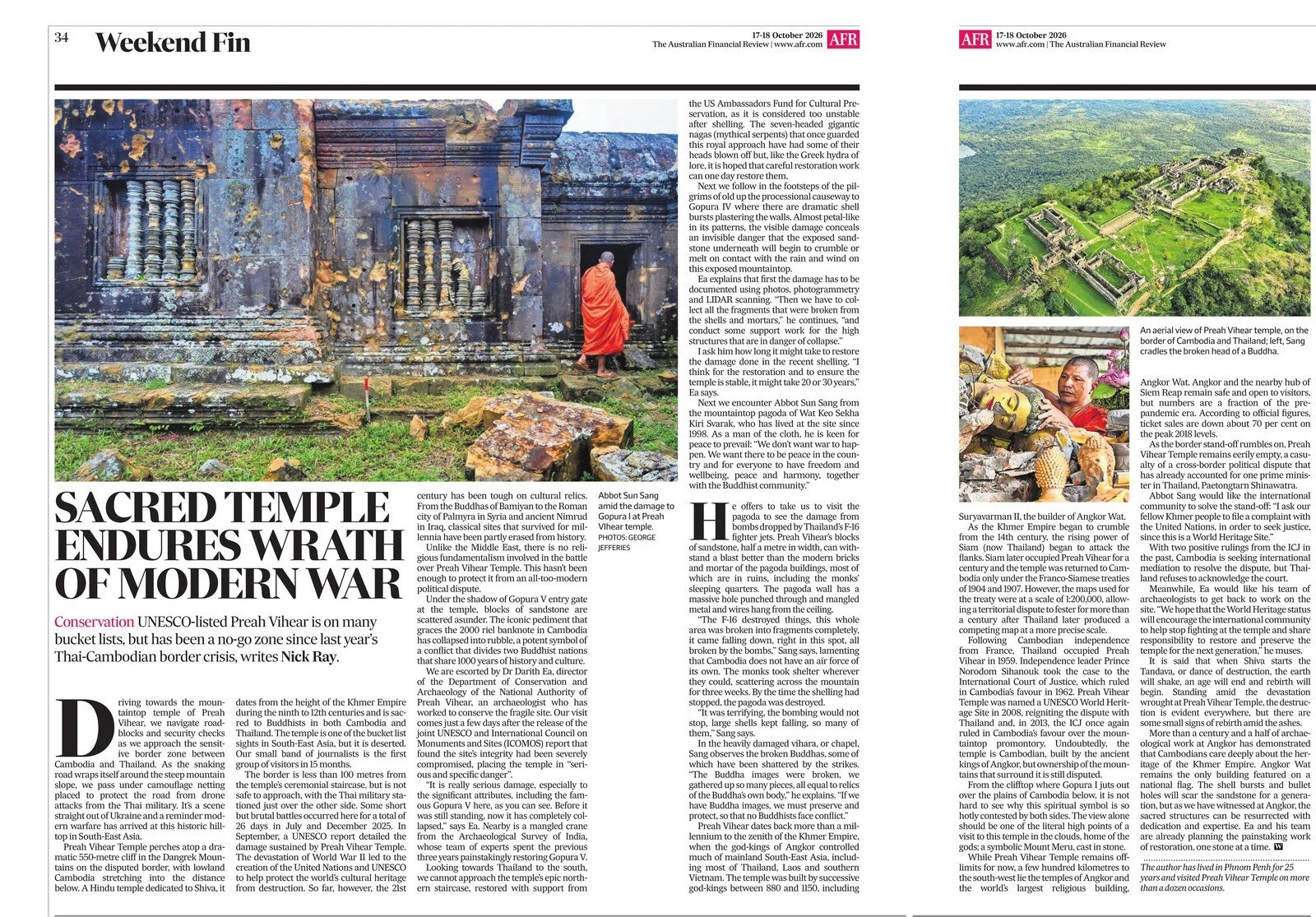
The print edition of Weekend Fin, 17 October 2026.
How the trip came together
Nick was heading to the northwest of Cambodia to research his section of a new Lonely Planet book, and Preah Vihear was on his list. As soon as he mentioned it, I asked to come along. I'd wanted to see the temple and the damage for myself since the fighting last year. We went on spec, with no commission in place, planning to shoot the story first and then work together to sell it.
Nick organised the access through the Ministry of Culture and Fine Arts, whose minister, H.E. Dr Phoeurng Sackona, I'd interviewed for the feature documentary Loot. The ministry pointed us to Dr Darith Ea, director of the Department of Conservation and Archaeology at the National Authority for Preah Vihear. Nick and Darith go back to 2000, when Lara Croft: Tomb Raider filmed at the Angkor temples and Nick worked on the production as a line producer. The authority wanted international attention on what had happened to the temple, and they made us welcome from the start.
Battambang to Sra Em
We spent the first night in Battambang, then drove on to Tbeng Meanchey, the provincial capital of Preah Vihear, where Nick looked at hotels for the guidebook. From there we continued to Sra Em, the closest town to the temple. That evening we met Darith and a couple of his staff to introduce ourselves and go over what we'd be allowed to do and what the situation was on the mountain. We had dinner with them afterwards. The mood was sombre.
We set off at about 7.30 the next morning and wound our way up the mountain road. We'd been told to expect a couple of hours at the top, and we ended up spending about four.
The abbot and the pagoda
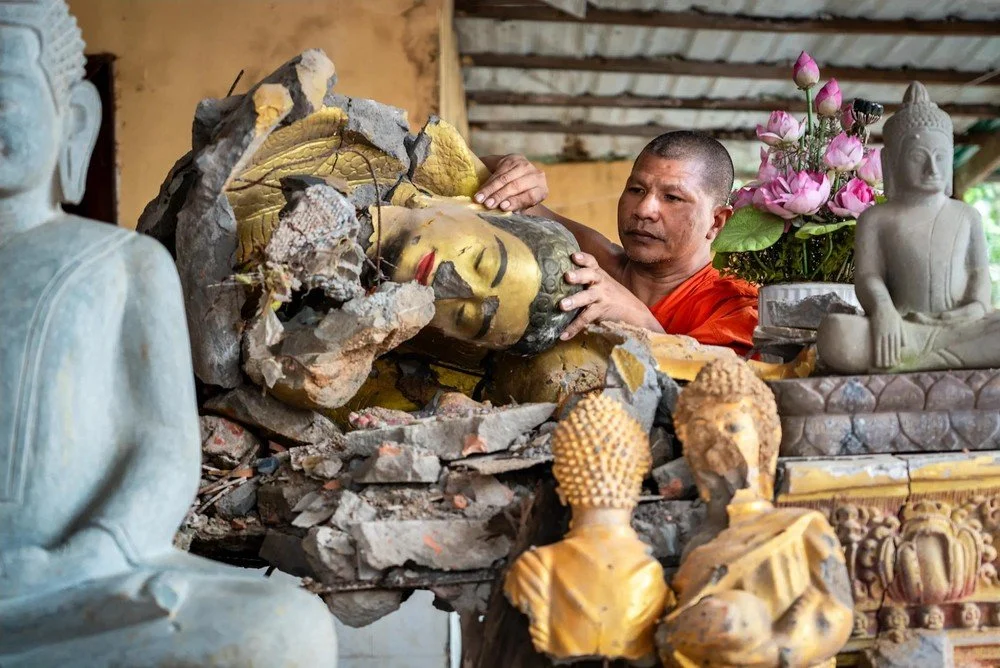
Our first stop on the way up was Wat Keo Sekha Kiri Svarak, the modern pagoda on the mountain. Abbot Sun Sang has lived at Preah Vihear since 1998. He took us around the pagoda, where most of the buildings are in ruins, including the monks' sleeping quarters. He has gathered the broken Buddha images and fragments together and is keeping them as evidence of what happened.
“The Buddha images were broken, we gathered up so many pieces, all equal to relics of the Buddha's own body,” he said. “We don't want war to happen. We want there to be peace in the country and for everyone to have freedom and wellbeing, peace and harmony, together with the Buddhist community.”
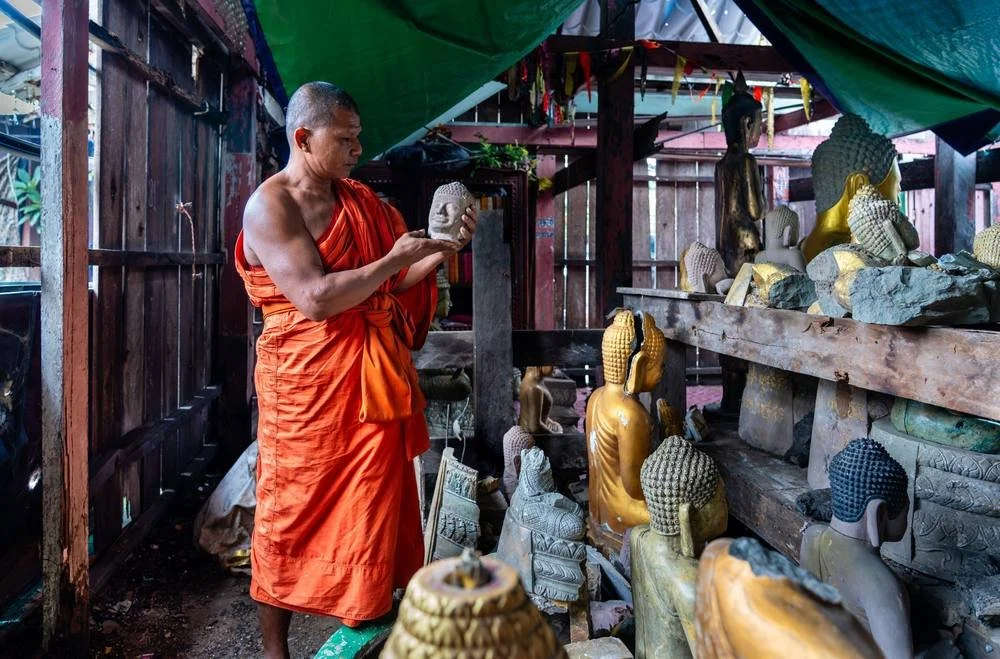
Abbot Sun Sang with a broken Buddha head. He has gathered the damaged statues together at the pagoda. © George Jefferies
The damage to the temple
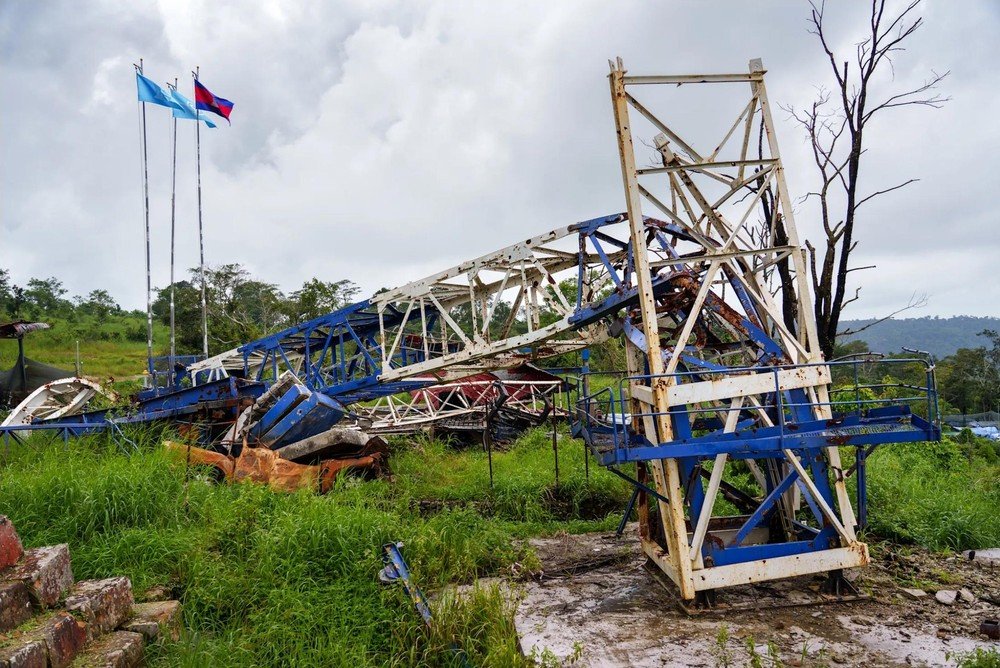
From the pagoda we went up to the temple itself. Preah Vihear was built by successive Angkorian kings between the ninth and 12th centuries, and runs for around 800 metres along the slope to the cliff edge through five gopuras, or gateways. Gopura V, the gateway that appears on the 2,000 riel banknote, is now a pile of sandstone blocks. A crumpled crane belonging to the Archaeological Survey of India lies beside it. Their team had spent the previous three years restoring the gateway.
“It is really serious damage, especially to the significant attributes, including the famous Gopura V here, as you can see,” Darith said. “Before it was still standing, now it has completely collapsed.” His team has documented 562 separate points of damage across the site.
After an assessment by UNESCO and the International Council on Monuments and Sites (ICOMOS), the first jobs are documenting the damage with photography, photogrammetry and 3D scanning, collecting the broken fragments, and propping up the structures at risk of collapse. “I think the restoration of the temple will take 20 or 30 years,” Darith said.
Working around the restrictions
Parts of the site nearest the border, including the northern staircase, were off limits. The Cambodian Mine Action Centre (CMAC) has been through the temple since the fighting and believes the mines and unexploded ordnance have been cleared, but the red warning signs are still up and we stuck to the paths and the main temple structures.
Shooting stills and video on the move
We didn't know how long we'd have at the top or exactly what we'd be allowed to film, so I kept the kit light, moved quickly and worked with available light throughout.
I shot stills on the Sony A7 IV with a Sony FE 24-105mm f/4 G, and used the same camera for handheld video with the Sony XLR-K3M adapter kit and its shotgun mic on the hot shoe. A second body, the Sony A7S III with a Tamron 17-28mm f/2.8, was on a gimbal with a Rode VideoMic for following Darith and the abbot as they walked us through the site. Sinat, one of Nick's guides, came up with us as an assistant and held the boom during the interviews. We'd worked together before on CNN's Nomad with Carlton McCoy.
From 500 frames to the magazine
I shot just under 500 frames over the morning. Afterwards the magazine asked to see what we had, and we sent around 25 selects. Once they'd seen the photos, they asked Nick to write the piece. I delivered the final selection as full-size JPEGs and DNG raw files.
The online version carries six of my photographs, and the print edition opened with the abbot at Gopura I across the top of page 34, with a second frame of him holding a broken Buddha head on the facing page.
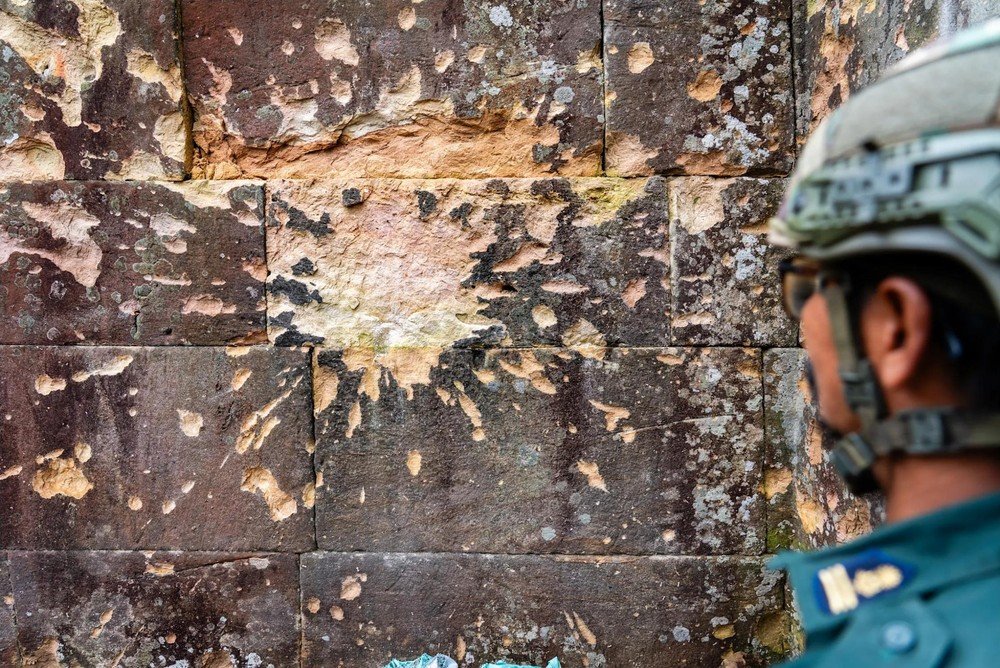
I also shot video throughout the day, including the interviews with Darith and the abbot. The stills and footage from Preah Vihear are available to license for editorial and broadcast use. You can read Nick's full story on the AFR website.
Back down the mountain
Four hours wasn't long, but it was enough to see the scale of the damage and to hear from the people looking after the temple. Darith and his team are ready to start the long work of restoration as soon as the situation allows. For more on covering the border dispute, see my post on filming CNA Insider's documentary on the Thailand-Cambodia border.
For licensing, commissions and collaborations across Cambodia and Southeast Asia, get in touch. You can see more of my work as a photographer in Cambodia and as a video journalist.
Director of Photography on Loot: Filming the Return of 14 Looted Khmer Artefacts to Cambodia
In July 2024 I worked as director of photography on segments of Loot: A Story of Crime and Redemption, filming the return of 14 looted Khmer artefacts from the Metropolitan Museum of Art in New York to Phnom Penh, Cambodia.
In July 2024 I worked as director of photography on segments of Loot: A Story of Crime and Redemption, a feature documentary by Canadian production company New Theory Pictures, filming the return of 14 looted Khmer artefacts from the Metropolitan Museum of Art in New York to Phnom Penh, Cambodia. The brief covered the repatriation, from the plane landing to the formal handover at the National Museum, and a large part of the filming told the story of Thanaren Than, a former cultural heritage investigator.
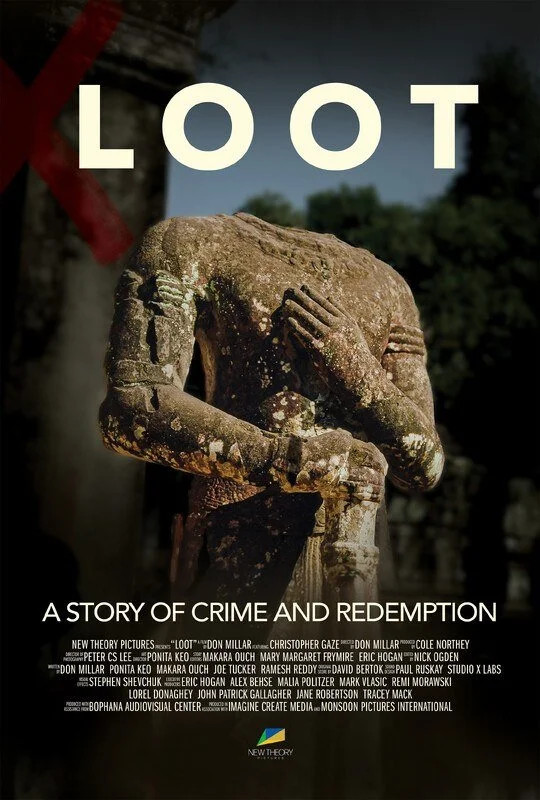
Loot: A Story of Crime and Redemption, directed by Don Millar for New Theory Pictures
Directed by Don Millar, the film traces the looting of Cambodia's temples during decades of conflict, the British dealer Douglas Latchford at the centre of the trade, and the long effort to bring the stolen pieces home. The team had been working on it for a long time, filming across Cambodia, Thailand, the US and the UK. I came in at the end of that process, for the moment the Met's pieces arrived back in Cambodia.
Preparing with the Production Team
I had a couple of meetings with producer Cole Northey and Don Millar, followed by a separate session with the film's cinematographer, Peter CS Lee, to go through his DP lookbook. It was a comprehensive, well-prepared document covering framing, movement, lighting and camera settings, so our conversation focused on the technical detail and the shooting style he wanted. From prep and planning through the shoot to footage handover, I was on the job for more than a week.
Filming with Thanaren Than
Thanaren is a former cultural heritage investigator who is personally connected to the statues, and her story ties the film to Cambodia's own efforts to investigate the looting. She was the first person we filmed. Her master interview was shot in the gardens of the National Museum as a two-camera setup, using the framings Peter had set out in the lookbook.
After the interview we filmed B-roll with her, all of it on the gimbal: riding in a tuk-tuk, walking along the riverside and making a blessing at a small pagoda. She then travelled out to the airport with us, and we filmed informal interviews with her along the way.
On the Runway at Phnom Penh International Airport
At Phnom Penh International Airport we were on the runway as the plane landed and filmed the crates carrying the artefacts being unloaded. It started raining soon after the artefacts arrived, which in Cambodia is taken as a sign of good luck.
We interviewed Brad Gordon in the rain about how he felt seeing the pieces come home. Brad is the American lawyer (now also a Cambodian citizen) who has represented the Cambodian government in its efforts to trace and recover looted antiquities for around a decade.
From the airport we followed the convoy back to the National Museum of Cambodia, where the museum team began unboxing the pieces.
The Handover Ceremony at the National Museum
The next day the artefacts were formally handed over at the National Museum in a ceremony presided over by H.E. Dr Phoeurng Sackona, Minister of Culture and Fine Arts, who has championed the campaign to bring Cambodia's looted heritage home. We filmed the unveiling of the returned pieces, which include a 10th-century stone sculpture of the goddess Uma from Koh Ker and a bronze Bodhisattva Avalokiteshvara that the Met bought from Douglas Latchford in 1992.
The Met is one of the major museums that had displayed looted Khmer pieces, and its decision to return them was a significant moment for Cambodia. We interviewed both H.E. Phoeurng Sackona and H.E. Pen Moni Makara, Secretary of State at the Ministry of Culture and Fine Arts.
The Technical Setup: Matching the Lookbook
Peter's lookbook set out a clear visual approach. Formal interviews were two cameras locked off, with talking heads shot into the corners of rooms and the subject lit slightly brighter than the background. Informal interviews were gimbal plus tripod or handheld. B-roll mixed wide static frames showing people in their environment with handheld coverage for moments that only happen once, and smooth gimbal moves for calmer sequences, establishing shots and moments of impact. He wanted gimbal movement to mimic the range of a set of speed rails, grounding the camerawork in classical technique.
For lighting, the direction was to lean into the naturalism of each location while pushing shape, shadow and contrast, and to shoot exteriors backlit when the sun was low. The colour reference sat between the bright sunlight and coloured streets of Cambodia and the cloudier light of London.
The production shot predominantly on the Sony FX3 in S-Log3 and S-Gamut3.Cine at 23.98fps, recording 10-bit 4:2:2 XAVC S-I. I shot with my Sony A7S III and Sony A7 IV, both in S-Log3 and recording to the highest-quality intra-frame codec each camera offers, so the footage would cut with the rest of the film in the grade. The A7S III shares its sensor with the FX3 and went on the gimbal for Thanaren's B-roll, and the two cameras ran together for the interviews. It's a similar two-camera interview setup to the one I used as DoP on CNA Insider's documentary on the Funan Techo Canal.
Loot on the Big Screen
Loot premiered at the International Festival of Films on Art in Montreal in March 2025 and has since screened at festivals including the Cambodia International Film Festival in Phnom Penh. It has now been officially launched in Cambodia and opened at Legend Cinema in Phnom Penh, Siem Reap and Sihanoukville on 16 October 2026. I attended a private screening there in early October 2026 and enjoyed seeing footage I'd shot on a big screen.
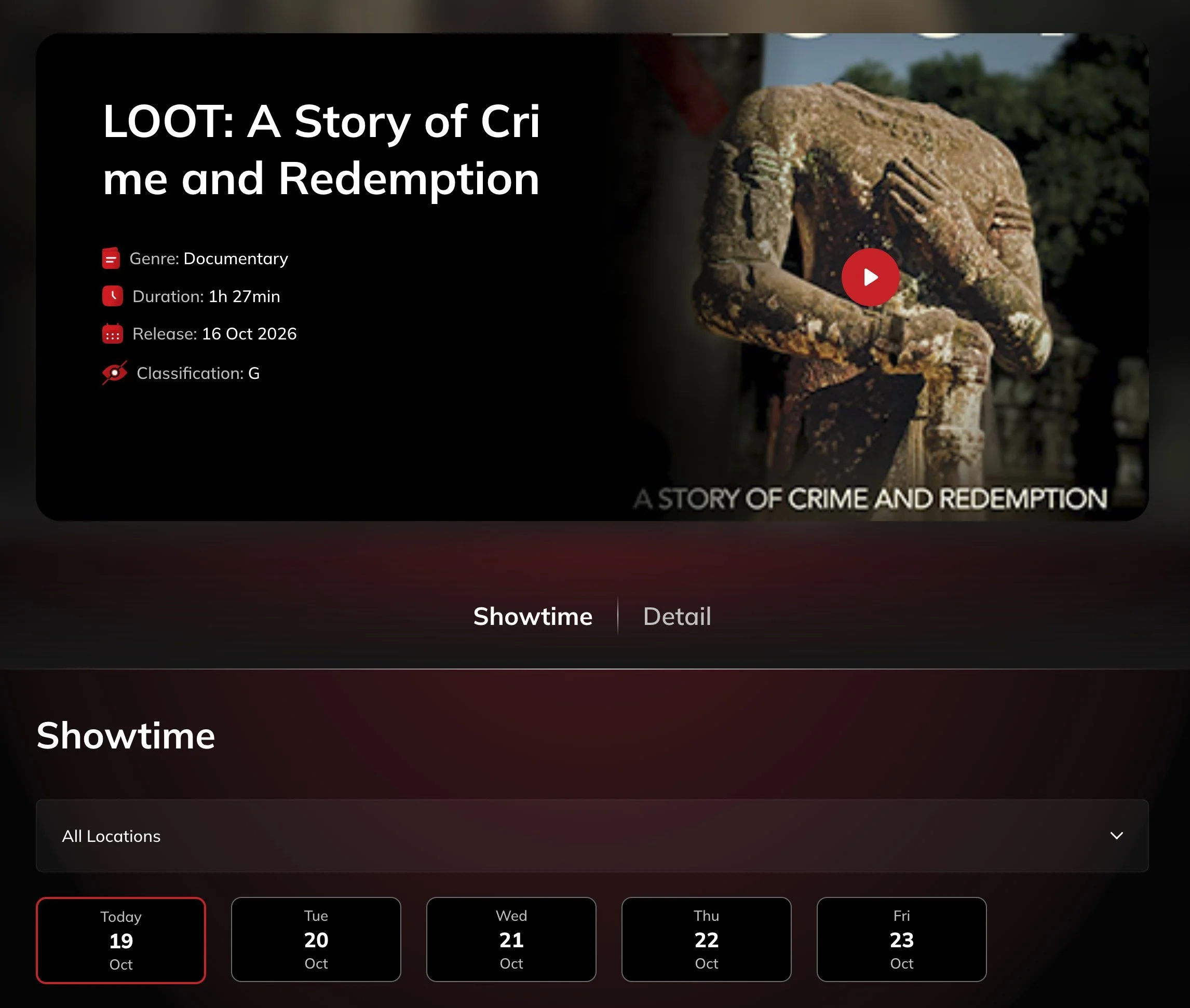
Loot on general release at Legend Cinema, Phnom Penh, from 16 October 2026
A 55-minute edit is also showing on Emirates' ice inflight entertainment, listed under Latest Documentaries, which I came across flying to France this summer.
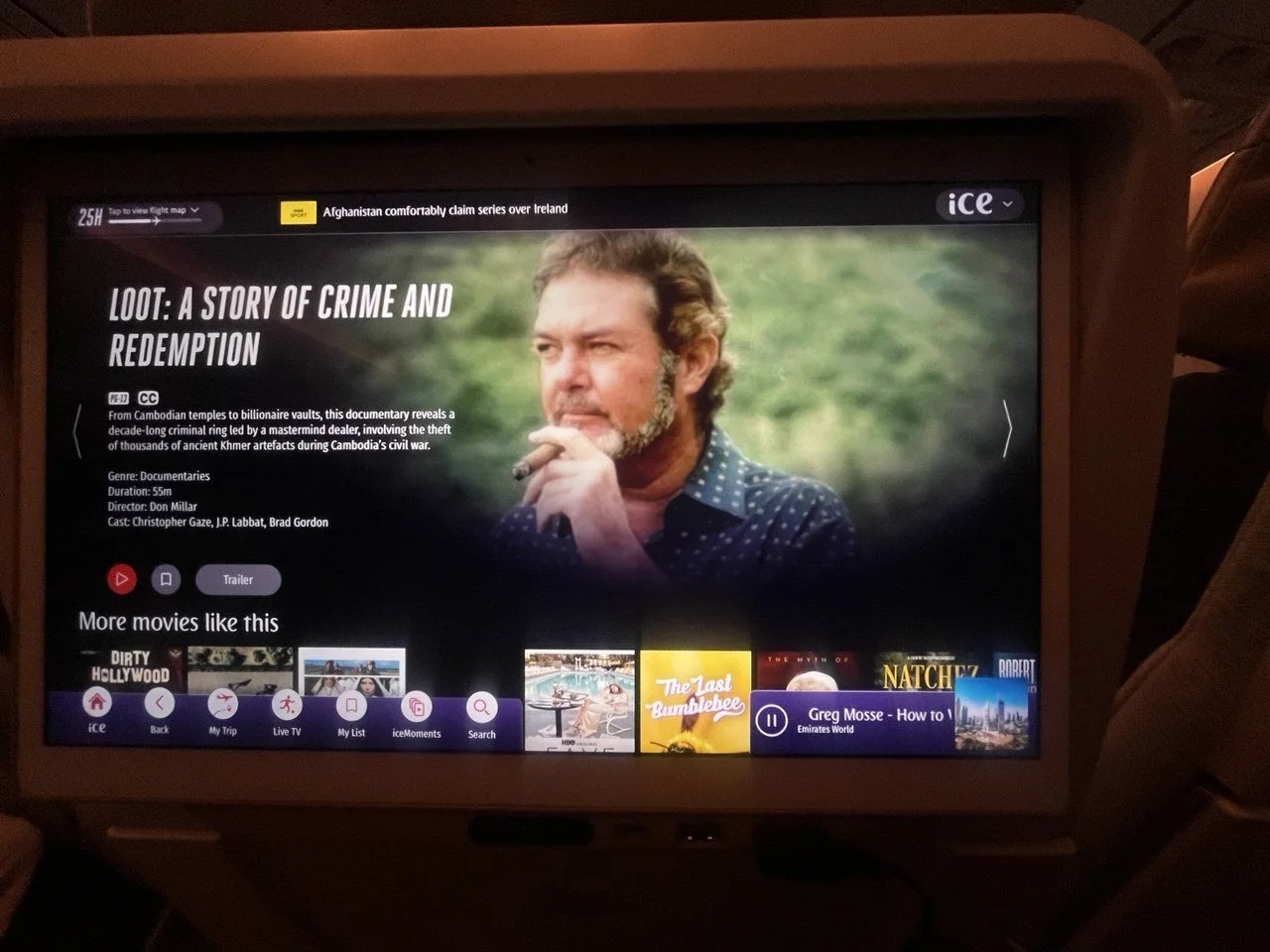
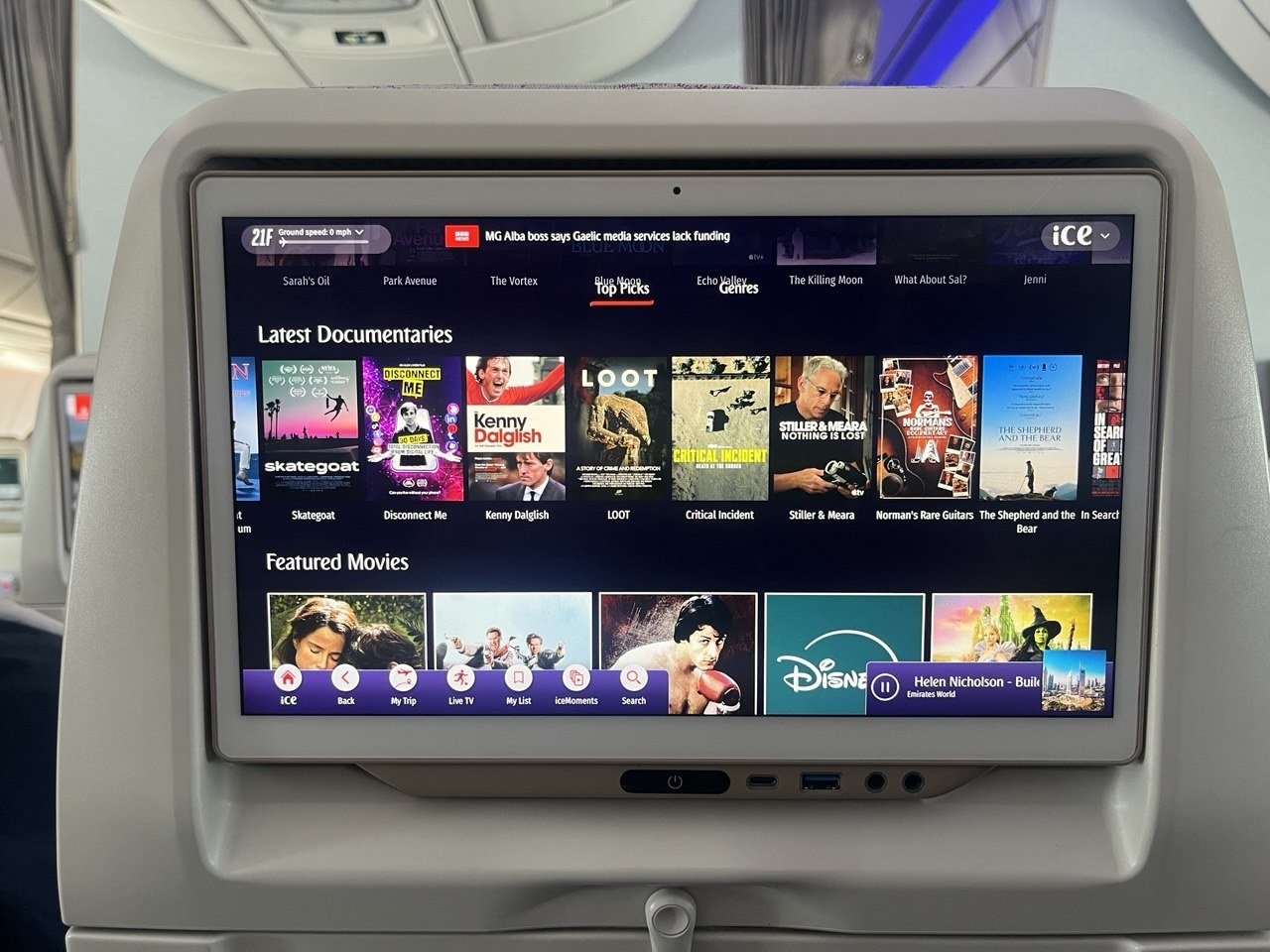
My part in Loot was a small one. The team spent a long time building the story, and the edit by Nick Ogden and Nicholas T. Shepard brings it together well. Having spent four years on Last of the Elephant Men, which I co-directed with Arnaud Bouquet and Daniel Ferguson, I know how much work goes into a feature documentary before anyone sees it. Coming in at the end to film the pieces coming home was a good way to contribute to a story that matters a great deal to Cambodia.
You can see more of my documentary work as a director of photography and camera operator in Cambodia, or read about proposing and shooting the Cambodian side of the Thailand-Cambodia border story for CNA Insider. For commissions and collaborations across Cambodia and Southeast Asia, get in touch.